
How to find the perimeter of a polygon
ACT Math · Learn by Concept
Help Questions
ACT Math › How to find the perimeter of a polygon
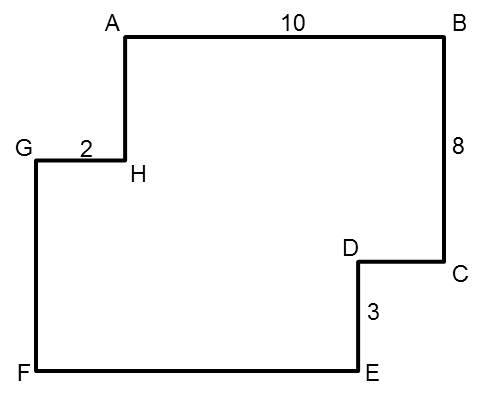
All segments of the polygon meet at right angles (90 degrees). The length of segment 


Find the perimeter of the polygon.


Explanation
The perimeter of the polygon is 46. Think of this polygon as a rectangle with two of its corners "flipped" inwards. This "flipping" changes the area of the rectangle, but not its perimeter; therefore, the top and bottom sides of the original rectangle would be 12 units long 

In the figure below, each pair of intersecting line segments forms a right angle, and all the lengths are given in feet. What is the perimeter, in feet, of the figure?
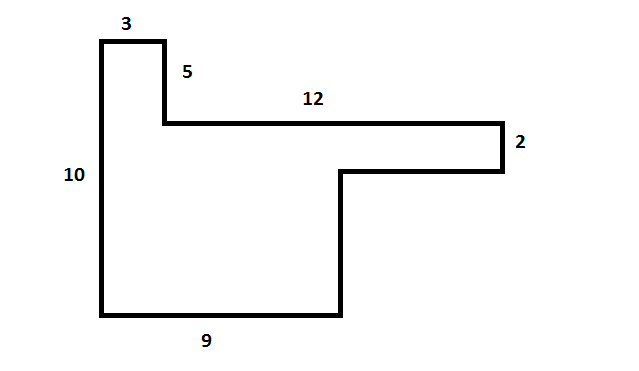


Explanation
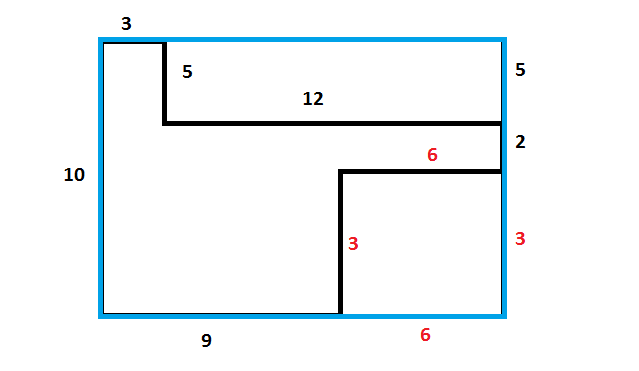
Fill in the missing sides by thinking about the entire figure as a big rectangle. In the figure below, the large rectangle is outlined in blue and the missing numbers are supplied in red.
What is the perimeter of a regular, 


Explanation
To find the perimeter of an 

