
2D Art - AP Art History
Card 1 of 2380

The above painting depicts what biblical scene that was a common feature of medieval art?
The above painting depicts what biblical scene that was a common feature of medieval art?
Tap to reveal answer
This painting is by the Medieval artist Fra Angelico and known as the Cortona Annunciation. Painted from 1433-1434, it depicts the archangel Gabriel telling the Virgin Mary that she is pregnant with the Christ child. The Annunciation, as a key moment in the Bible, was a very popular theme in Medieval European art. This particular painting was part of an altarpiece in a church in Cortona, Italy, and painted by a priest.
This painting is by the Medieval artist Fra Angelico and known as the Cortona Annunciation. Painted from 1433-1434, it depicts the archangel Gabriel telling the Virgin Mary that she is pregnant with the Christ child. The Annunciation, as a key moment in the Bible, was a very popular theme in Medieval European art. This particular painting was part of an altarpiece in a church in Cortona, Italy, and painted by a priest.
← Didn't Know|Knew It →
In Medieval art, a man dying with arrows in his sides depicts .
In Medieval art, a man dying with arrows in his sides depicts .
Tap to reveal answer
Saint Sebastian was a martyr of the early Christian church who died in the Diocletian persecutions of the third century CE. He became a popular figure in medieval art, usually shown as being tied to a tree with arrows in his sides. This image was to convey what an appropriate Christian martyr should look like.
Saint Sebastian was a martyr of the early Christian church who died in the Diocletian persecutions of the third century CE. He became a popular figure in medieval art, usually shown as being tied to a tree with arrows in his sides. This image was to convey what an appropriate Christian martyr should look like.
← Didn't Know|Knew It →
The Virgin Mary is usually depicted wearing what color garment in medieval art?
The Virgin Mary is usually depicted wearing what color garment in medieval art?
Tap to reveal answer
As one of the most revered figures in Christianity, the Virgin Mary was a constant theme of medieval religious art. In order to function as a highly visible symbol in a mostly illiterate culture, many different symbols were used to distinguish Mary. Most important was her robe, which was typically a bright blue color, which denoted expensive silks.
As one of the most revered figures in Christianity, the Virgin Mary was a constant theme of medieval religious art. In order to function as a highly visible symbol in a mostly illiterate culture, many different symbols were used to distinguish Mary. Most important was her robe, which was typically a bright blue color, which denoted expensive silks.
← Didn't Know|Knew It →
In Christian hagiography, which figure is depicted as having a stone in his head?
In Christian hagiography, which figure is depicted as having a stone in his head?
Tap to reveal answer
Saint Stephen is traditionally considered the first martyr of Christianity, and his death by stoning is told in the biblical book of Acts. Due to the circumstances of his death, he was usually depicted with a stone implanted in his skull. Thanks to his position as "the first martyr," Saint Stephen very commonly depicted in Medieval art.
Saint Stephen is traditionally considered the first martyr of Christianity, and his death by stoning is told in the biblical book of Acts. Due to the circumstances of his death, he was usually depicted with a stone implanted in his skull. Thanks to his position as "the first martyr," Saint Stephen very commonly depicted in Medieval art.
← Didn't Know|Knew It →
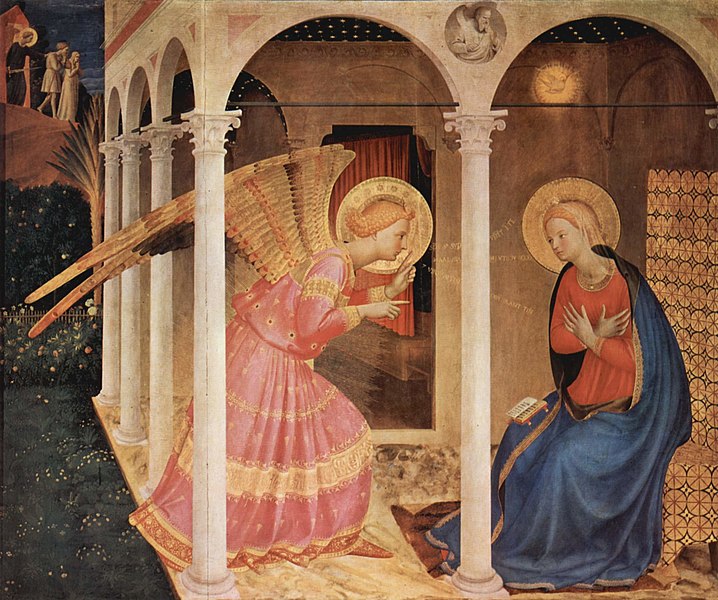

Figure 3 Figure 4
Each of these paintings portray a story from .

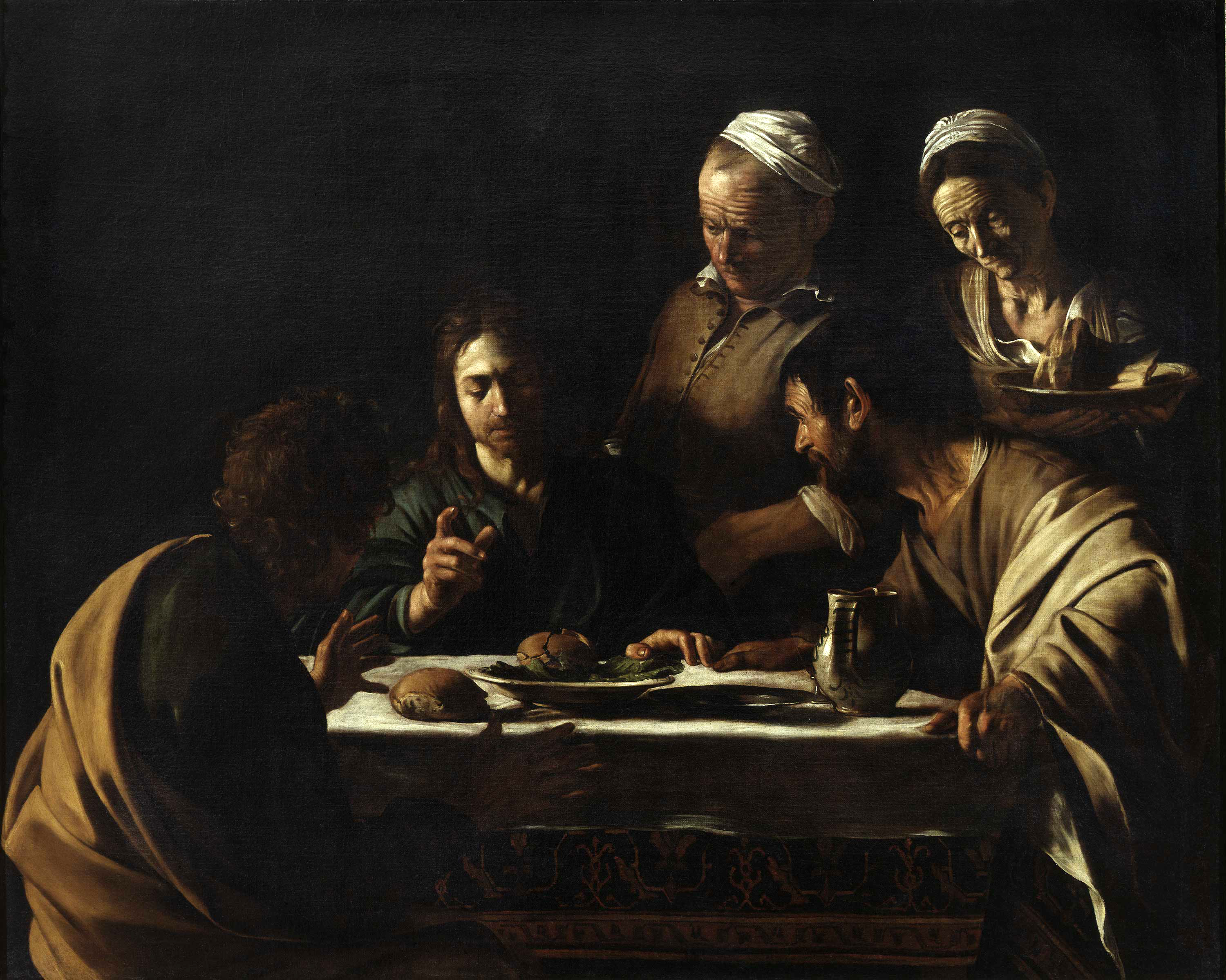
Figure 3 Figure 4
Each of these paintings portray a story from .
Tap to reveal answer
These two images each portray an important story from the Gospels in the New Testament, the four books that tell the life of Jesus Christ. The image on the left is of the Annunciation, the announcement an angel made to the Virgin Mary telling her that she was pregnant with the Christ child. It was painted in 1433 by Fra Angelico. The image on the right is of the risen Jesus encountering his disciples in Emmaus, painted by Caravaggio in 1606.
Figure 3: The Annunciation (Cortona) by Fra Angelico (1433)
Figure 4: Supper at Emmaus (Milan) by Caravaggio (1606)
These two images each portray an important story from the Gospels in the New Testament, the four books that tell the life of Jesus Christ. The image on the left is of the Annunciation, the announcement an angel made to the Virgin Mary telling her that she was pregnant with the Christ child. It was painted in 1433 by Fra Angelico. The image on the right is of the risen Jesus encountering his disciples in Emmaus, painted by Caravaggio in 1606.
Figure 3: The Annunciation (Cortona) by Fra Angelico (1433)
Figure 4: Supper at Emmaus (Milan) by Caravaggio (1606)
← Didn't Know|Knew It →
Figure 3 Figure 4
Images like the painting shown in Figure 3 were particularly important for Christians who were .
Figure 3 Figure 4
Images like the painting shown in Figure 3 were particularly important for Christians who were .
Tap to reveal answer
Most people in Medieval Europe could not read or write, but the Catholic church had a vested interest in helping all of its members to become familiar with and understand the stories of the Bible. A painting like the one presented here by Fra Angelico not only shows the Angel Gabriel telling the Virgin Mary of her status as the mother of the Christ child, but gives a larger symbolic structure to the event.
Figure 3: The Annunciation (Cortona) by Fra Angelico (1433)
Figure 4: Supper at Emmaus (Milan) by Caravaggio (1606)
Most people in Medieval Europe could not read or write, but the Catholic church had a vested interest in helping all of its members to become familiar with and understand the stories of the Bible. A painting like the one presented here by Fra Angelico not only shows the Angel Gabriel telling the Virgin Mary of her status as the mother of the Christ child, but gives a larger symbolic structure to the event.
Figure 3: The Annunciation (Cortona) by Fra Angelico (1433)
Figure 4: Supper at Emmaus (Milan) by Caravaggio (1606)
← Didn't Know|Knew It →


Both of these images were painted in .
Both of these images were painted in .
Tap to reveal answer
Each of these images, Leonardo da Vinci's 1489 "Lady with an Ermine" and Sandro Botticelli's 1486 "The Birth of Venus", are classic examples of Italian Renaissance paintings. Da Vinci painted in Milan, under the patronage of the Sforza family, the longtime Dukes of Milan. Botticelli had the Medici family as patrons in the city-state of Florence.
Each of these images, Leonardo da Vinci's 1489 "Lady with an Ermine" and Sandro Botticelli's 1486 "The Birth of Venus", are classic examples of Italian Renaissance paintings. Da Vinci painted in Milan, under the patronage of the Sforza family, the longtime Dukes of Milan. Botticelli had the Medici family as patrons in the city-state of Florence.
← Didn't Know|Knew It →
In the painting, the animal represents .
In the painting, the animal represents .
Tap to reveal answer
The animal is an ermine (which is a type of weasel). In Leonardo da Vinci's time, the ermine was commonly used throughout Europe as a symbol for purity.
If you don't remember something like this on test day, you can still make an educated guess. For example, you might not remember anything about ermines, but perhaps you remember that white doves are often used in art to symbolize purity. That would lead you to the correct answer.
At the very least, you can probably eliminate the answers "disgrace" and "sensuality" just from looking at the painting. Eliminating two of the four answer choices doubles your chances of guessing correctly.
The animal is an ermine (which is a type of weasel). In Leonardo da Vinci's time, the ermine was commonly used throughout Europe as a symbol for purity.
If you don't remember something like this on test day, you can still make an educated guess. For example, you might not remember anything about ermines, but perhaps you remember that white doves are often used in art to symbolize purity. That would lead you to the correct answer.
At the very least, you can probably eliminate the answers "disgrace" and "sensuality" just from looking at the painting. Eliminating two of the four answer choices doubles your chances of guessing correctly.
← Didn't Know|Knew It →
The painting depicts a scene from .
The painting depicts a scene from .
Tap to reveal answer
Botticelli's "The Birth of Venus" portrays a story from Greek mythology. This is common in Italian Renaissance art.
Botticelli's "The Birth of Venus" portrays a story from Greek mythology. This is common in Italian Renaissance art.
← Didn't Know|Knew It →
The painting demonstrates , which was introduced during the Renaissance.
The painting demonstrates , which was introduced during the Renaissance.
Tap to reveal answer
While da Vinci's "Lady with an Ermine" is an excellent portrait in its own right, the truly revolutionary aspect of the work is the small sense of motion in the painting. Da Vinci's subject is turning ever so slightly and is captured in a small amount of tension. The ability to capture movement was something introduced during the Renaissance.
While da Vinci's "Lady with an Ermine" is an excellent portrait in its own right, the truly revolutionary aspect of the work is the small sense of motion in the painting. Da Vinci's subject is turning ever so slightly and is captured in a small amount of tension. The ability to capture movement was something introduced during the Renaissance.
← Didn't Know|Knew It →
The painting was created for the leading family of .
The painting was created for the leading family of .
Tap to reveal answer
This is "The Birth of Venus" by Sandro Botticelli. He worked directly for the Medicis, a family of bankers who ruled the northern Italian city-state of Florence.
This is "The Birth of Venus" by Sandro Botticelli. He worked directly for the Medicis, a family of bankers who ruled the northern Italian city-state of Florence.
← Didn't Know|Knew It →
Venus' pose is called .
Venus' pose is called .
Tap to reveal answer
In Botticelli's "The Birth of Venus", Venus is standing in the classical contrapposto pose. Literally meaning "counter pose", the pose features the subject placing most of her weight on one foot, giving the effect of movement. This classical pose became very popular in the Renaissance, in large part because of Botticelli.
In Botticelli's "The Birth of Venus", Venus is standing in the classical contrapposto pose. Literally meaning "counter pose", the pose features the subject placing most of her weight on one foot, giving the effect of movement. This classical pose became very popular in the Renaissance, in large part because of Botticelli.
← Didn't Know|Knew It →

Figure 1

Figure 2
The man in red in the lower image is most likely .
Figure 1
Figure 2
The man in red in the lower image is most likely .
Tap to reveal answer
In the Christian tradition, particularly in Medieval Christianity, the inventor of Christian icons and the first person to paint any images of Christ was the Evangelist Saint Luke. In his 1440 painting, "Saint Luke Drawing the Virgin, the early Netherlandish painter Rogier van der Weyden includes someone painting the Madonna and Child with a book open at his feet. Both of these clues indicate that the figure is Saint Luke.
In the Christian tradition, particularly in Medieval Christianity, the inventor of Christian icons and the first person to paint any images of Christ was the Evangelist Saint Luke. In his 1440 painting, "Saint Luke Drawing the Virgin, the early Netherlandish painter Rogier van der Weyden includes someone painting the Madonna and Child with a book open at his feet. Both of these clues indicate that the figure is Saint Luke.
← Didn't Know|Knew It →
Figure 1
Figure 2
Figure 1 is an early example of what would come to be known as .
Figure 1
Figure 2
Figure 1 is an early example of what would come to be known as .
Tap to reveal answer
"Genre painting" is a term used to denote any painting of an everyday scene, rather than a history painting, portrait, or landscape. "Genre painting" was essentially unheard of in the Middle Ages, when the focus was on devotional art and paintings of kings and rulers. Jan van Eyck's 1434 Arnolfini Portrait, which depicts a merchant getting married in his own chambers, is an early example of a move toward genre painting, which would become much more popular during the Renaissance.
"Genre painting" is a term used to denote any painting of an everyday scene, rather than a history painting, portrait, or landscape. "Genre painting" was essentially unheard of in the Middle Ages, when the focus was on devotional art and paintings of kings and rulers. Jan van Eyck's 1434 Arnolfini Portrait, which depicts a merchant getting married in his own chambers, is an early example of a move toward genre painting, which would become much more popular during the Renaissance.
← Didn't Know|Knew It →
Figure 1
Figure 2
Figure 1 is remarkable for its inclusion of .
Figure 1
Figure 2
Figure 1 is remarkable for its inclusion of .
Tap to reveal answer
In the very back of the painting, the "Arnolfini Portrait" by Jan van Eyck, is a convex mirror that is positioned directly between the two main figures. This mirror reflects the back of the couple, and the entire room. The use of such a device was peculiar for medieval art, but presaged some of the new approaches that would be taken during the Italian Renaissance.
In the very back of the painting, the "Arnolfini Portrait" by Jan van Eyck, is a convex mirror that is positioned directly between the two main figures. This mirror reflects the back of the couple, and the entire room. The use of such a device was peculiar for medieval art, but presaged some of the new approaches that would be taken during the Italian Renaissance.
← Didn't Know|Knew It →
Figure 1
Figure 2
The garden in the background of Figure 2 represents .
Figure 1
Figure 2
The garden in the background of Figure 2 represents .
Tap to reveal answer
As an image of Christian devotion, Rogier van der Weyden's "Saint Luke Drawing the Virgin" is laced with important symbolism, including the small garden seen through the window in the painting's background. For Christians, any garden is a reference to the Garden of Eden, the earthly paradise where Adam and Eve were innocent before disobeying God. This notion of innocence is also reflected in the fact that this is a portrait of the Virgin Mary, who was believed to have never sinned.
As an image of Christian devotion, Rogier van der Weyden's "Saint Luke Drawing the Virgin" is laced with important symbolism, including the small garden seen through the window in the painting's background. For Christians, any garden is a reference to the Garden of Eden, the earthly paradise where Adam and Eve were innocent before disobeying God. This notion of innocence is also reflected in the fact that this is a portrait of the Virgin Mary, who was believed to have never sinned.
← Didn't Know|Knew It →
Figure 1
Figure 2
Figure 1 features the dog as a possible symbol of .
Figure 1
Figure 2
Figure 1 features the dog as a possible symbol of .
Tap to reveal answer
Many wealthy women in the middle ages and early modern era kept lap dogs as pets, which were seen as symbols of their motherly caring before they were married. Jan van Eyck places the dog in the middle of his Arnolfini Portrait, making it already a member of this new family.
Many wealthy women in the middle ages and early modern era kept lap dogs as pets, which were seen as symbols of their motherly caring before they were married. Jan van Eyck places the dog in the middle of his Arnolfini Portrait, making it already a member of this new family.
← Didn't Know|Knew It →
Figure 1 Figure 2


Both images above were painted by .
Figure 1 Figure 2
Both images above were painted by .
Tap to reveal answer
Hans Holbein the Younger was the court painter in England throughout much of the reign of King Henry VIII, a position he was brought to from his native Augsburg through connections with humanists in Northern Europe. These portraits are of two of Henry's advisors, Sir Thomas More (on the left) and Thomas Cromwell. Both bear the distinct elements of Holbein's portrait style, with accessories telling of the subject's life and a sense of perspective providing a remarkable realism for the era.
Figure 1: Portrait of Sir Thomas More by Hans Holbein the Younger (1527)
Figure 2: Portrait of Thomas Cromwell by Hans Holbein the Younger (c. 1533)
Hans Holbein the Younger was the court painter in England throughout much of the reign of King Henry VIII, a position he was brought to from his native Augsburg through connections with humanists in Northern Europe. These portraits are of two of Henry's advisors, Sir Thomas More (on the left) and Thomas Cromwell. Both bear the distinct elements of Holbein's portrait style, with accessories telling of the subject's life and a sense of perspective providing a remarkable realism for the era.
Figure 1: Portrait of Sir Thomas More by Hans Holbein the Younger (1527)
Figure 2: Portrait of Thomas Cromwell by Hans Holbein the Younger (c. 1533)
← Didn't Know|Knew It →
Image A Image B
In the image on the left, the subject's pendant is a symbol of .
Image A Image B
In the image on the left, the subject's pendant is a symbol of .
Tap to reveal answer
The pendant Sir Thomas More is wearing as a necklace in this portrait by Hans Holbein the Younger is a Tudor rose, the symbol of the English House of Tudor established by Henry VII. More was a key advisor to Henry VII's son, Henry VIII, and is shown by Holbein as a loyal subject to his king. Additionally, the round, floral emblem, a mix of the white rose of York and the red rose of Lancaster, was widely used in English society throughout the sixteenth century.
Figure 1: Portrait of Sir Thomas More by Hans Holbein the Younger (1527)
Figure 2: Portrait of Thomas Cromwell by Hans Holbein the Younger (c. 1533)
The pendant Sir Thomas More is wearing as a necklace in this portrait by Hans Holbein the Younger is a Tudor rose, the symbol of the English House of Tudor established by Henry VII. More was a key advisor to Henry VII's son, Henry VIII, and is shown by Holbein as a loyal subject to his king. Additionally, the round, floral emblem, a mix of the white rose of York and the red rose of Lancaster, was widely used in English society throughout the sixteenth century.
Figure 1: Portrait of Sir Thomas More by Hans Holbein the Younger (1527)
Figure 2: Portrait of Thomas Cromwell by Hans Holbein the Younger (c. 1533)
← Didn't Know|Knew It →
Image A Image B
In the drawing on the right, the personal artifacts on the table in front of the image show .
Image A Image B
In the drawing on the right, the personal artifacts on the table in front of the image show .
Tap to reveal answer
This portrait of Thomas Cromwell by Hans Holbein the Younger presents him as a chief councillor to Henry VIII, King of England. Cromwell was from a relatively minor family, and he made his way to his position through a mixture of hard work and political maneuvering. Holbein presents Cromwell behind a table with books and papers on it to exemplify Cromwell's position despite his background and reputation.
Figure 1: Portrait of Sir Thomas More by Hans Holbein the Younger (1527)
Figure 2: Portrait of Thomas Cromwell by Hans Holbein the Younger (c. 1533)
This portrait of Thomas Cromwell by Hans Holbein the Younger presents him as a chief councillor to Henry VIII, King of England. Cromwell was from a relatively minor family, and he made his way to his position through a mixture of hard work and political maneuvering. Holbein presents Cromwell behind a table with books and papers on it to exemplify Cromwell's position despite his background and reputation.
Figure 1: Portrait of Sir Thomas More by Hans Holbein the Younger (1527)
Figure 2: Portrait of Thomas Cromwell by Hans Holbein the Younger (c. 1533)
← Didn't Know|Knew It →