
Renaissance to Contemporary 2D Art - AP Art History
Card 1 of 1872
What 19th century painter created 29 known portraits of Hortense Fiquet (his wife) over a period of over two decades?
What 19th century painter created 29 known portraits of Hortense Fiquet (his wife) over a period of over two decades?
Tap to reveal answer
Cezanne's series of portraits of his wife, brought together in a recent Metropolitan Museum of Art exhibit called "Madame Cezanne," ranged in medium from watercolor to graphite to oil. Several of the portraits feature Madame Cezanne in red or blue dresses, sitting in an armchair.
Cezanne's series of portraits of his wife, brought together in a recent Metropolitan Museum of Art exhibit called "Madame Cezanne," ranged in medium from watercolor to graphite to oil. Several of the portraits feature Madame Cezanne in red or blue dresses, sitting in an armchair.
← Didn't Know|Knew It →
The artistic movement known as Impressionism was reacting against what establishment that set standards in French culture?
The artistic movement known as Impressionism was reacting against what establishment that set standards in French culture?
Tap to reveal answer
The Salon was the absolute pinnacle of the French art world from 1725 to 1890. In the late nineteenth century, the committee in charge of what art work was shown at the Salon valued grand historical and dramatic landscape paintings done in a clean realist style. The Impressionists desired to make paintings of vivid emotion with visible brushstrokes about scenes of everyday life.
The Salon was the absolute pinnacle of the French art world from 1725 to 1890. In the late nineteenth century, the committee in charge of what art work was shown at the Salon valued grand historical and dramatic landscape paintings done in a clean realist style. The Impressionists desired to make paintings of vivid emotion with visible brushstrokes about scenes of everyday life.
← Didn't Know|Knew It →
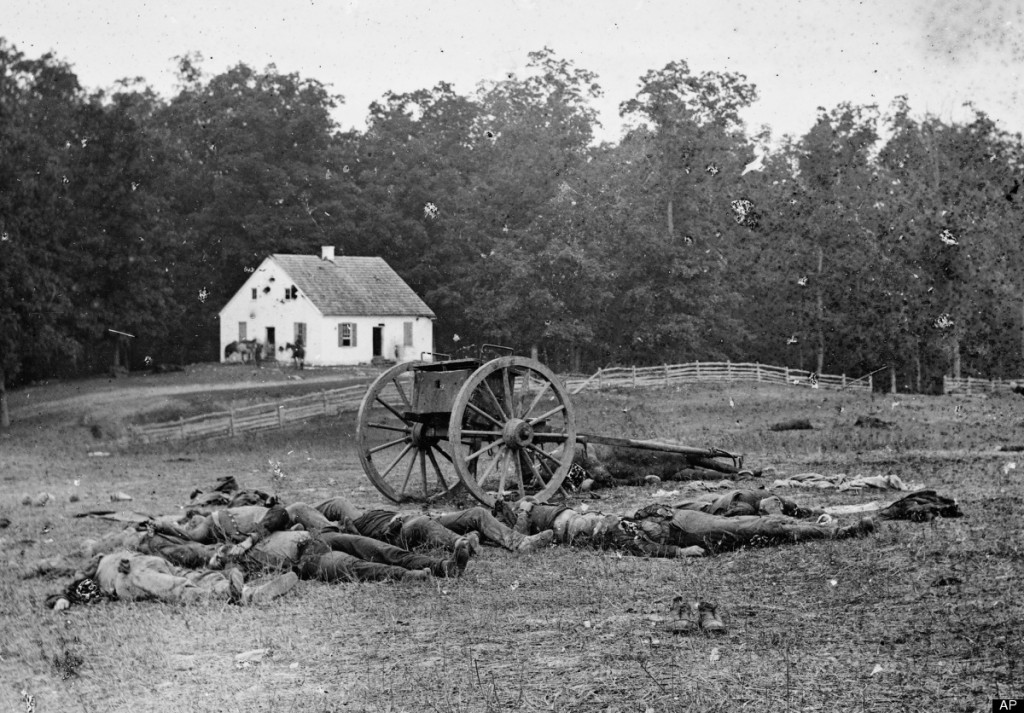
The above photo is taken from what conflict?
The above photo is taken from what conflict?
Tap to reveal answer
During the American Civil War, the medium of photography was still relatively new, having only been invented a few decades before the outbreak of war in 1861. The photographer Matthew Brady was the pioneering figure in developing photography throughout the war. By capturing war in the realistic medium of photography, Brady both helped people see war in a different manner and appreciate the possibilities of photography.
During the American Civil War, the medium of photography was still relatively new, having only been invented a few decades before the outbreak of war in 1861. The photographer Matthew Brady was the pioneering figure in developing photography throughout the war. By capturing war in the realistic medium of photography, Brady both helped people see war in a different manner and appreciate the possibilities of photography.
← Didn't Know|Knew It →
Paul Gauguin's later work depicts the culture, people, and environment of .
Paul Gauguin's later work depicts the culture, people, and environment of .
Tap to reveal answer
Paul Gauguin was an important French post-impressionist who had considerable success and personal conflicts in late nineteenth century Paris. Gauguin took his first trip to Polynesia in the 1880s, and began living there nearly full time by 1890. Gauguin's work featured the women of Polynesia in his work in bright colors and interesting poses, and with odd symbolism.
Paul Gauguin was an important French post-impressionist who had considerable success and personal conflicts in late nineteenth century Paris. Gauguin took his first trip to Polynesia in the 1880s, and began living there nearly full time by 1890. Gauguin's work featured the women of Polynesia in his work in bright colors and interesting poses, and with odd symbolism.
← Didn't Know|Knew It →


Figure 1 Figure 2
The painting shown in Figure 2 uses artwork and style from .

Figure 1 Figure 2
The painting shown in Figure 2 uses artwork and style from .
Tap to reveal answer
The Japanese government underwent a major shift in 1868 with the "Meiji Restoration," which saw it open up to outside powers for the first time in centuries. In Europe, this sparked an intense interest in Japanese art traditions, particularly among impressionists and post-impressionists. Vincent van Gogh was one of many artists to place Japanese artwork into his own work, as in his Portrait of P_ère Tanguy from 1887-8.
Figure 1: The Starry Night by Vincent van Gogh (1889)
Figure 2: Portrait of Père Tanguy by Vincent van Gogh (1887-8)
The Japanese government underwent a major shift in 1868 with the "Meiji Restoration," which saw it open up to outside powers for the first time in centuries. In Europe, this sparked an intense interest in Japanese art traditions, particularly among impressionists and post-impressionists. Vincent van Gogh was one of many artists to place Japanese artwork into his own work, as in his Portrait of P_ère Tanguy from 1887-8.
Figure 1: The Starry Night by Vincent van Gogh (1889)
Figure 2: Portrait of Père Tanguy by Vincent van Gogh (1887-8)
← Didn't Know|Knew It →
Figure 1 Figure 2
The figure in the painting shown in Figure 2 is presented in a pose that makes him appear .
Figure 1 Figure 2
The figure in the painting shown in Figure 2 is presented in a pose that makes him appear .
Tap to reveal answer
The use of the many Japanese images behind the central figure suggest a sense of chaos, but the individual's pose suggests serenity and calm. This is an intentional choice by the artist, Vincent van Gogh, so that his subject, Père Tanguy, can have his serene nature enhanced. The comfortable setting and the relaxed position of the arms also strongly contribute to this sense.
Figure 1: The Starry Night by Vincent van Gogh (1889)
Figure 2: Portrait of Père Tanguy by Vincent van Gogh (1887-8)
The use of the many Japanese images behind the central figure suggest a sense of chaos, but the individual's pose suggests serenity and calm. This is an intentional choice by the artist, Vincent van Gogh, so that his subject, Père Tanguy, can have his serene nature enhanced. The comfortable setting and the relaxed position of the arms also strongly contribute to this sense.
Figure 1: The Starry Night by Vincent van Gogh (1889)
Figure 2: Portrait of Père Tanguy by Vincent van Gogh (1887-8)
← Didn't Know|Knew It →


Figure 3 Figure 4
The above paintings portray the chief generals of .
Figure 3 Figure 4
The above paintings portray the chief generals of .
Tap to reveal answer
These two paintings portray the most famous generals of early nineteenth century Europe. The painting in Figure 3 portrays Napoleon Bonaparte, as painted by Jacques-Louis David, and the painting in Figure 4 portrays Arthur Wellesley, Duke of Wellington, as painted by Sir Thomas Lawrence. These two men met in battle numerous times, most famously at Waterloo in 1815, in Southern Belgium. There, Wellington's allied forces soundly defeated Napoleon's Grand Army of France, forcing him into a second and more permanent exile.
Figure 3: Napoleon Crossing the Alps by Jaques-Louis David (1801)
Figure 4: Portrait of Sir Arthur Wellesley, First Duke of Wellington by Sir Thomas Lawrence (1814)
These two paintings portray the most famous generals of early nineteenth century Europe. The painting in Figure 3 portrays Napoleon Bonaparte, as painted by Jacques-Louis David, and the painting in Figure 4 portrays Arthur Wellesley, Duke of Wellington, as painted by Sir Thomas Lawrence. These two men met in battle numerous times, most famously at Waterloo in 1815, in Southern Belgium. There, Wellington's allied forces soundly defeated Napoleon's Grand Army of France, forcing him into a second and more permanent exile.
Figure 3: Napoleon Crossing the Alps by Jaques-Louis David (1801)
Figure 4: Portrait of Sir Arthur Wellesley, First Duke of Wellington by Sir Thomas Lawrence (1814)
← Didn't Know|Knew It →

Figure 1

Figure 2
The movement represented by these two paintings were a reaction to
Figure 1
Figure 2
The movement represented by these two paintings were a reaction to
Tap to reveal answer
Realism, developed and argued for by Gustave Courbet, reacted harshly against Romanticism by attempting to find authenticity and commonality in stark depictions of everyday scenes. In each of these paintings, Courbet portrays himself largely as what he was, a working painter struggling to make a living. In The Desperate Man, Courbet's self-portrait still exhibits some Romantic-era traits, such as energetic strokes and movement. The Meeting, however, is a fully mature Realism, with extremely clean lines depicting a scene of common people rather than monarchs or heroes.
Realism, developed and argued for by Gustave Courbet, reacted harshly against Romanticism by attempting to find authenticity and commonality in stark depictions of everyday scenes. In each of these paintings, Courbet portrays himself largely as what he was, a working painter struggling to make a living. In The Desperate Man, Courbet's self-portrait still exhibits some Romantic-era traits, such as energetic strokes and movement. The Meeting, however, is a fully mature Realism, with extremely clean lines depicting a scene of common people rather than monarchs or heroes.
← Didn't Know|Knew It →

Figure 3

Figure 4
Figure 3 is a painting of
Figure 3
Figure 4
Figure 3 is a painting of
Tap to reveal answer
This painting is one of a series of paintings by Claude Monet that is a study of the front of Rouen Cathedral in different light, with this one taking place in direct sunlight. All of the Impressionists were highly interested in the different effects of light, but Monet went farther than his fellow Impressionists. The avant-garde artistic approach, including incomplete and highly visible paint lines, is contrasted with the subject of the painting, a Gothic cathedral in Rouen, Normandy.
This painting is one of a series of paintings by Claude Monet that is a study of the front of Rouen Cathedral in different light, with this one taking place in direct sunlight. All of the Impressionists were highly interested in the different effects of light, but Monet went farther than his fellow Impressionists. The avant-garde artistic approach, including incomplete and highly visible paint lines, is contrasted with the subject of the painting, a Gothic cathedral in Rouen, Normandy.
← Didn't Know|Knew It →
Figure 3
Figure 4
To capture the light on the edifice, the painter of Figure 3
Figure 3
Figure 4
To capture the light on the edifice, the painter of Figure 3
Tap to reveal answer
Monet's goal in painting Rouen Cathedral was to capture the ever-changing aspect of light off the stone of the building. Due to constantly-shifting nature of the light, however, Monet had to use a unique approach, wherein he layered small amounts of different but related colors to create a naturalistic effect of shimmering light. This technique and effect would be used later by Monet in his famous series of Water Lillies from his own garden.
Monet's goal in painting Rouen Cathedral was to capture the ever-changing aspect of light off the stone of the building. Due to constantly-shifting nature of the light, however, Monet had to use a unique approach, wherein he layered small amounts of different but related colors to create a naturalistic effect of shimmering light. This technique and effect would be used later by Monet in his famous series of Water Lillies from his own garden.
← Didn't Know|Knew It →
The type of photographic process which placed the image on a silver plate was the .
The type of photographic process which placed the image on a silver plate was the .
Tap to reveal answer
A daguerreotype was a laborious process, which captured an image on a piece of silver, which then had to be rubbed with various chemicals to make the image appear; nonetheless, the daguerreotype, named after its inventor Louis Daguerre, was the first easily reproduceable photographic process on its creation in 1837. The daguerreotype was supplanted by the 1860s with a variety of quicker methods.
A daguerreotype was a laborious process, which captured an image on a piece of silver, which then had to be rubbed with various chemicals to make the image appear; nonetheless, the daguerreotype, named after its inventor Louis Daguerre, was the first easily reproduceable photographic process on its creation in 1837. The daguerreotype was supplanted by the 1860s with a variety of quicker methods.
← Didn't Know|Knew It →
In the "hierarchy of genres," which of the following genres was accorded the highest place by artistic authorities in the early eighteenth century?
In the "hierarchy of genres," which of the following genres was accorded the highest place by artistic authorities in the early eighteenth century?
Tap to reveal answer
The "hierarchy of genres" was the dominant view of the different forms of painting by the academies that controlled art in the seventeenth, eighteenth, and nineteenth centuries, especially in France. Different types of painting were seen as requiring more mastery than others. History painting (which included religious and mythological themes) was above all other genres, as it was believed to require more control over its scope and perspective.
The "hierarchy of genres" was the dominant view of the different forms of painting by the academies that controlled art in the seventeenth, eighteenth, and nineteenth centuries, especially in France. Different types of painting were seen as requiring more mastery than others. History painting (which included religious and mythological themes) was above all other genres, as it was believed to require more control over its scope and perspective.
← Didn't Know|Knew It →
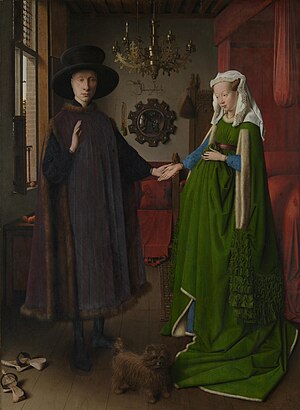
Pictured above is the Arnolfini Portrait, and can be found at the Website of National Gallery, London.
The painting was most likely commissioned by .
Pictured above is the Arnolfini Portrait, and can be found at the Website of National Gallery, London.
The painting was most likely commissioned by .
Tap to reveal answer
The painting, of the Northern European Renaissance, is of Giovanni Arnolfini and his young wife, and the detail of the characters and their home suggests it was commissioned by the couple, likely the husband, for their wedding.
The painting, of the Northern European Renaissance, is of Giovanni Arnolfini and his young wife, and the detail of the characters and their home suggests it was commissioned by the couple, likely the husband, for their wedding.
← Didn't Know|Knew It →

Pictured above is a work entitled Impression, Sunrise.
This style of art is most known for which of the following?
Pictured above is a work entitled Impression, Sunrise.
This style of art is most known for which of the following?
Tap to reveal answer
Impressionists where innovative in their brush work, freeing their hand to capture the essence of a work instead of a realistic depiction of the scene portrayed. They also broke with tradition and began to paint outdoors instead of in a studio.
Impressionists where innovative in their brush work, freeing their hand to capture the essence of a work instead of a realistic depiction of the scene portrayed. They also broke with tradition and began to paint outdoors instead of in a studio.
← Didn't Know|Knew It →
Pictured above is a work entitled Impression, Sunrise.
Roughly when was this work painted?
Pictured above is a work entitled Impression, Sunrise.
Roughly when was this work painted?
Tap to reveal answer
The work was completed in 1872 and marks the beginning of the Impressionist movement in France.
The work was completed in 1872 and marks the beginning of the Impressionist movement in France.
← Didn't Know|Knew It →
Pictured above is a work entitled Impression, Sunrise.
The effect of this work on an audience is best described as .
Pictured above is a work entitled Impression, Sunrise.
The effect of this work on an audience is best described as .
Tap to reveal answer
Monet was intending only to capture the feeling of the sunrise and expresses it in only a semi-realistic way. It is not surreal because it lacks the nonrealistic and fantastical quality. It is of this earth, but is not meant to be incredibly realistic.
Monet was intending only to capture the feeling of the sunrise and expresses it in only a semi-realistic way. It is not surreal because it lacks the nonrealistic and fantastical quality. It is of this earth, but is not meant to be incredibly realistic.
← Didn't Know|Knew It →
Pictured above is a work entitled Impression, Sunrise.
The subject of the work speaks to .
Pictured above is a work entitled Impression, Sunrise.
The subject of the work speaks to .
Tap to reveal answer
The painting is neither melancholic nor frightened. It is hazy and light, meant to give the impression of a new day and a new era, especially for a France that was recovering and industrializing after their defeat in the Franco-Prussian war.
The painting is neither melancholic nor frightened. It is hazy and light, meant to give the impression of a new day and a new era, especially for a France that was recovering and industrializing after their defeat in the Franco-Prussian war.
← Didn't Know|Knew It →
Pictured above is a work entitled Impression, Sunrise.
The audience of this work was likely .
Pictured above is a work entitled Impression, Sunrise.
The audience of this work was likely .
Tap to reveal answer
The impressionist work was not commissioned, and likely would have put off Parisians used to seeing the works at the Salon de Paris. It was highly criticized at the time of its completion, and only appealed to other Impressionists.
The impressionist work was not commissioned, and likely would have put off Parisians used to seeing the works at the Salon de Paris. It was highly criticized at the time of its completion, and only appealed to other Impressionists.
← Didn't Know|Knew It →
Pictured above is a work entitled Impression, Sunrise.
The artist of this work most directly influenced all of the following EXCEPT .
Pictured above is a work entitled Impression, Sunrise.
The artist of this work most directly influenced all of the following EXCEPT .
Tap to reveal answer
Paul Gauguin is the only one listed who is not an Impressionist, whose work post-dated Monet's Sunrise. He is a post-impressionist who deviated purposefully from the work of his predecessors.
Paul Gauguin is the only one listed who is not an Impressionist, whose work post-dated Monet's Sunrise. He is a post-impressionist who deviated purposefully from the work of his predecessors.
← Didn't Know|Knew It →
Pictured above is a work entitled Impression, Sunrise.
The piece aims to do all of the following EXCEPT .
Pictured above is a work entitled Impression, Sunrise.
The piece aims to do all of the following EXCEPT .
Tap to reveal answer
Monet was not popular until much later in his career, and painted as a statement of rebellion instead of as an attempt to gain popularity.
Monet was not popular until much later in his career, and painted as a statement of rebellion instead of as an attempt to gain popularity.
← Didn't Know|Knew It →