
Identifying artists, works, or schools of fourteenth- through sixteenth-century 2D art - AP Art History
Card 1 of 140
The early Renaissance painter of the massive allegorical painting "The Garden of Earthly Delights" was .
The early Renaissance painter of the massive allegorical painting "The Garden of Earthly Delights" was .
Tap to reveal answer
The Dutch painter Hieronymus Bosch took many of the conventions of Medieval art and turned them on their heads. His "Garden of Earthly Delights" is a triptych altarpiece depicting religious themes and is meant as instruction in religious belief. It also, however, features odd figures and a massive scale with unique perspectives that helped kick off many features of Renaissance art.
The Dutch painter Hieronymus Bosch took many of the conventions of Medieval art and turned them on their heads. His "Garden of Earthly Delights" is a triptych altarpiece depicting religious themes and is meant as instruction in religious belief. It also, however, features odd figures and a massive scale with unique perspectives that helped kick off many features of Renaissance art.
← Didn't Know|Knew It →
The artist Michelangelo was key to the development of art.
The artist Michelangelo was key to the development of art.
Tap to reveal answer
Michelangelo (1475-1564) is often considered the prototypical "Renaissance man," along with Leonardo da Vinci, thanks to his key involvement in painting, sculpture, and design. Michelangelo was one of the earliest painters to use realistic imagery, forced perspective, and an enhanced use of color. His work was key in the development of Renaissance themes like a return to classical motifs, a sense of grandeur, and the use of scientific knowledge in the arts.
Michelangelo (1475-1564) is often considered the prototypical "Renaissance man," along with Leonardo da Vinci, thanks to his key involvement in painting, sculpture, and design. Michelangelo was one of the earliest painters to use realistic imagery, forced perspective, and an enhanced use of color. His work was key in the development of Renaissance themes like a return to classical motifs, a sense of grandeur, and the use of scientific knowledge in the arts.
← Didn't Know|Knew It →
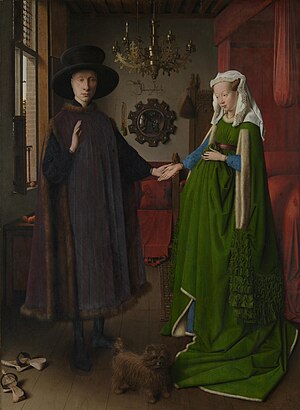
Pictured above is the Arnolfini Portrait, and can be found at the Website of National Gallery, London.
In commemoration of what event was this portrait painted?
Pictured above is the Arnolfini Portrait, and can be found at the Website of National Gallery, London.
In commemoration of what event was this portrait painted?
Tap to reveal answer
The joining of their hands, the headdress the woman wears and the position of the woman nearer to the bed are all symbolic of a union of marriage between these two people.
The joining of their hands, the headdress the woman wears and the position of the woman nearer to the bed are all symbolic of a union of marriage between these two people.
← Didn't Know|Knew It →
Which painter created the portrait of Holy Roman Emperor Charles V on horseback that commemorated the Imperial victory at the Battle of Mühlberg?
Which painter created the portrait of Holy Roman Emperor Charles V on horseback that commemorated the Imperial victory at the Battle of Mühlberg?
Tap to reveal answer
The Equestrian Portrait of Charles V, which includes the actual horse and armor the Emperor used at Mühlberg, is one of Titian's most famous and significant works. The painting combined a realistic foreground of the emperor and his horse with a more airy background, while containing little of the symbolic elements typical of paintings of the era. Titian's painting became a template for many later portraits of monarchs in equestrian poses.
The Equestrian Portrait of Charles V, which includes the actual horse and armor the Emperor used at Mühlberg, is one of Titian's most famous and significant works. The painting combined a realistic foreground of the emperor and his horse with a more airy background, while containing little of the symbolic elements typical of paintings of the era. Titian's painting became a template for many later portraits of monarchs in equestrian poses.
← Didn't Know|Knew It →
The Early Netherlandish painter who made the panel painting known as The Descent from the Cross was .
The Early Netherlandish painter who made the panel painting known as The Descent from the Cross was .
Tap to reveal answer
Rogier van der Weyden created the famous panel of The Descent from the Cross in 1435. The work features the rich colors and portraiture representative of much Early Netherlandish art, but also focuses the viewer's attention to the scene's humanity while simultaneously emphasizing the religious nature of the image. The effective combination of these two elements would prove hugely influential to Italian Renaissance painters.
Rogier van der Weyden created the famous panel of The Descent from the Cross in 1435. The work features the rich colors and portraiture representative of much Early Netherlandish art, but also focuses the viewer's attention to the scene's humanity while simultaneously emphasizing the religious nature of the image. The effective combination of these two elements would prove hugely influential to Italian Renaissance painters.
← Didn't Know|Knew It →
Which of the following was the official court painter for Henry VIII of England, and in that role created famous portraits of Anne Boleyn, Thomas More, and Thomas Cromwell?
Which of the following was the official court painter for Henry VIII of England, and in that role created famous portraits of Anne Boleyn, Thomas More, and Thomas Cromwell?
Tap to reveal answer
Hans Holbein the Younger is referred to with the suffix to differentiate him from his father, who was a painter of the Late Gothic school. Holbein the Younger was an innovator in the Northern Renaissance style, beginning in Germany and then moving to England to become the official painter for the court of King Henry VIII. There, he made significant advances to the art of portraiture with his paintings of the important figures of the court life in England.
Hans Holbein the Younger is referred to with the suffix to differentiate him from his father, who was a painter of the Late Gothic school. Holbein the Younger was an innovator in the Northern Renaissance style, beginning in Germany and then moving to England to become the official painter for the court of King Henry VIII. There, he made significant advances to the art of portraiture with his paintings of the important figures of the court life in England.
← Didn't Know|Knew It →
Which sixteenth-century artist worked primarily in Spain and painted The Burial of the Count of Orgaz, incorporating his own face into the scene?
Which sixteenth-century artist worked primarily in Spain and painted The Burial of the Count of Orgaz, incorporating his own face into the scene?
Tap to reveal answer
El Greco, born Domenikos Theotopoulos (1541–1614) was a Mannerist painter and sculptor. He born in Crete and worked in Rome and Spain. His well-known work The Burial of the Count of Orgaz was commissioned in 1586 by the parish priest of Santo Tomé.
El Greco, born Domenikos Theotopoulos (1541–1614) was a Mannerist painter and sculptor. He born in Crete and worked in Rome and Spain. His well-known work The Burial of the Count of Orgaz was commissioned in 1586 by the parish priest of Santo Tomé.
← Didn't Know|Knew It →
This artistic style flourished in Europe during the mid-to-late sixteenth century, and tended to be expressive and dynamic rather than serene and idealized.
This artistic style flourished in Europe during the mid-to-late sixteenth century, and tended to be expressive and dynamic rather than serene and idealized.
Tap to reveal answer
Mannerism departed from the High Renaissance style that emphasized symmetry, balance, and perfection. Instead, Mannerist artists allowed the imperfections, emotions, and disproportions of their subjects to show through, sometimes even enhancing them.
Mannerism departed from the High Renaissance style that emphasized symmetry, balance, and perfection. Instead, Mannerist artists allowed the imperfections, emotions, and disproportions of their subjects to show through, sometimes even enhancing them.
← Didn't Know|Knew It →
Which early Baroque Italian painter was is known for his dramatic use of chiaroscuro and darkly expressive biblical scenes, as well as frequently portraying young boys?
Which early Baroque Italian painter was is known for his dramatic use of chiaroscuro and darkly expressive biblical scenes, as well as frequently portraying young boys?
Tap to reveal answer
Michelangelo Caravaggio's paintings showed a striking use of the high contrast between dark and light known as chiaroscuro, pushing the technique further than any artist had previously. He used it to give drama to many of his psychologically charged paintings of religious scenes. He also often painted boys, sometimes incorporated into these scenes and sometimes in a non-religious or Classical context.
Michelangelo Caravaggio's paintings showed a striking use of the high contrast between dark and light known as chiaroscuro, pushing the technique further than any artist had previously. He used it to give drama to many of his psychologically charged paintings of religious scenes. He also often painted boys, sometimes incorporated into these scenes and sometimes in a non-religious or Classical context.
← Didn't Know|Knew It →
Based on his artistic work, who is mostly likely the artist who wrote that the most praiseworthy form of painting is the one that most resembles what it imitates?
Based on his artistic work, who is mostly likely the artist who wrote that the most praiseworthy form of painting is the one that most resembles what it imitates?
Tap to reveal answer
DaVinci even dissected human cadavers in his efforts to understand accurately the human form. His drawings and paintings reflect great attention to reproduction of reality, as seen in his quote. Matisse was a Fauve, Renoir, an Impressionist, and Parmigianino was a Mannerist, whose elongated body features depart from strict realism.
DaVinci even dissected human cadavers in his efforts to understand accurately the human form. His drawings and paintings reflect great attention to reproduction of reality, as seen in his quote. Matisse was a Fauve, Renoir, an Impressionist, and Parmigianino was a Mannerist, whose elongated body features depart from strict realism.
← Didn't Know|Knew It →
The Merode Alterpiece Triptych (ca. 1427–32) consists of three panels depicting .
The Merode Alterpiece Triptych (ca. 1427–32) consists of three panels depicting .
Tap to reveal answer
The three panels of the Merode Annunciation triptych show (from left to right) two friends of Mary and Joseph arriving to pay their respects, Mary sitting and reading calmly with the angel Gabriel and the tiny flying figure of the Holy Spirit, and Joseph at a wood-working bench.
The three panels of the Merode Annunciation triptych show (from left to right) two friends of Mary and Joseph arriving to pay their respects, Mary sitting and reading calmly with the angel Gabriel and the tiny flying figure of the Holy Spirit, and Joseph at a wood-working bench.
← Didn't Know|Knew It →
This early-to-mid sixteenth-century Flemish artist was known for his realistic, everyday scenes of peasants and commoners in his native Netherlands, such as Hunters In The Snow (1565).
This early-to-mid sixteenth-century Flemish artist was known for his realistic, everyday scenes of peasants and commoners in his native Netherlands, such as Hunters In The Snow (1565).
Tap to reveal answer
Pieter Bruegel the Elder was known to many at the time of his work as "peasant Bruegels" because he often used commoners and everyday scenes as his subject matter.
Pieter Bruegel the Elder was known to many at the time of his work as "peasant Bruegels" because he often used commoners and everyday scenes as his subject matter.
← Didn't Know|Knew It →
Beginning in the late 16th century in Italy and later spreading to most of Europe, this artistic style uses tension, exaggerated movement, and a high contrast of light and dark to convey intense emotion.
What artistic style is the above paragraph describing?
Beginning in the late 16th century in Italy and later spreading to most of Europe, this artistic style uses tension, exaggerated movement, and a high contrast of light and dark to convey intense emotion.
What artistic style is the above paragraph describing?
Tap to reveal answer
Baroque art, popular in Europe from the late sixteenth century through the early eighteenth century, featured intense emotions, exaggerated movement of its subjects, and a high-contrast style of use of light and dark colors. It was often used to represent the emotional depths of the Catholic church, as well as to glorify the church and the monarchy. Caravaggio is a famous painter from this time period who painted in the Baroque style.
Baroque art, popular in Europe from the late sixteenth century through the early eighteenth century, featured intense emotions, exaggerated movement of its subjects, and a high-contrast style of use of light and dark colors. It was often used to represent the emotional depths of the Catholic church, as well as to glorify the church and the monarchy. Caravaggio is a famous painter from this time period who painted in the Baroque style.
← Didn't Know|Knew It →
Who was the early Renaissance painter who created the triptych known as The Garden of Earthly Delights?
Who was the early Renaissance painter who created the triptych known as The Garden of Earthly Delights?
Tap to reveal answer
The Garden of Earthly Delights, painted between 1490 and 1510, is a highly idiosyncratic and complicated triptych of the Garden of Eden, earthly pleasures, and their subsequent punishment in a hell-like atmosphere. The religious overtones and multi-faceted story are features of most paintings by Hieronymus Bosch, who was an early Netherlandish painter during the Renaissance. Bosch's painting, now in the Museo del Prado in Madrid, was highly influential for its depiction of human forms, its allegorical tales, and its peculiar form of storytelling.
The Garden of Earthly Delights, painted between 1490 and 1510, is a highly idiosyncratic and complicated triptych of the Garden of Eden, earthly pleasures, and their subsequent punishment in a hell-like atmosphere. The religious overtones and multi-faceted story are features of most paintings by Hieronymus Bosch, who was an early Netherlandish painter during the Renaissance. Bosch's painting, now in the Museo del Prado in Madrid, was highly influential for its depiction of human forms, its allegorical tales, and its peculiar form of storytelling.
← Didn't Know|Knew It →
The painter well known for portraits of the court of Henry VIII of England is .
The painter well known for portraits of the court of Henry VIII of England is .
Tap to reveal answer
Hans Holbein the Younger made a name for himself by painting nearly every figure associated with the court of the English king Henry VIII. In doing so, he helped pioneer a new use of perspective in his portraits. Holbein's work helped push Renaissance art to new places simply through portraits.
Hans Holbein the Younger made a name for himself by painting nearly every figure associated with the court of the English king Henry VIII. In doing so, he helped pioneer a new use of perspective in his portraits. Holbein's work helped push Renaissance art to new places simply through portraits.
← Didn't Know|Knew It →
Who was the fifteenth-century Flemish painter who painted the massive Ghent Altarpiece?
Who was the fifteenth-century Flemish painter who painted the massive Ghent Altarpiece?
Tap to reveal answer
Jan van Eyck was a transformative figure in European painting, as his approach to painting depended on realism and a naturalistic viewpoint. His Ghent Altarpiece, also called The Lamb of God, was a departure from Medieval standards that typically valued idealization and symbolism in religious imagery. Van Eyck, who lived from 1390 to 1441, had an outsized influence on the artistic transformations that occurred during the Renaissance.
Jan van Eyck was a transformative figure in European painting, as his approach to painting depended on realism and a naturalistic viewpoint. His Ghent Altarpiece, also called The Lamb of God, was a departure from Medieval standards that typically valued idealization and symbolism in religious imagery. Van Eyck, who lived from 1390 to 1441, had an outsized influence on the artistic transformations that occurred during the Renaissance.
← Didn't Know|Knew It →
The artist who created the famous painting of Holy Roman Emperor Charles V on horseback was .
The artist who created the famous painting of Holy Roman Emperor Charles V on horseback was .
Tap to reveal answer
After the Battle of Muhlberg in 1547, the Holy Roman Emperor Charles V had a portrait commissioned to celebrate his victory. He specifically called on the Italian artist Titian, who created a portrait that was a model of Renaissance portraiture. Titian shows a realistic looking Emperor bestride a massive horse, with allusions to mythology, Roman art, and Charles' own history.
After the Battle of Muhlberg in 1547, the Holy Roman Emperor Charles V had a portrait commissioned to celebrate his victory. He specifically called on the Italian artist Titian, who created a portrait that was a model of Renaissance portraiture. Titian shows a realistic looking Emperor bestride a massive horse, with allusions to mythology, Roman art, and Charles' own history.
← Didn't Know|Knew It →
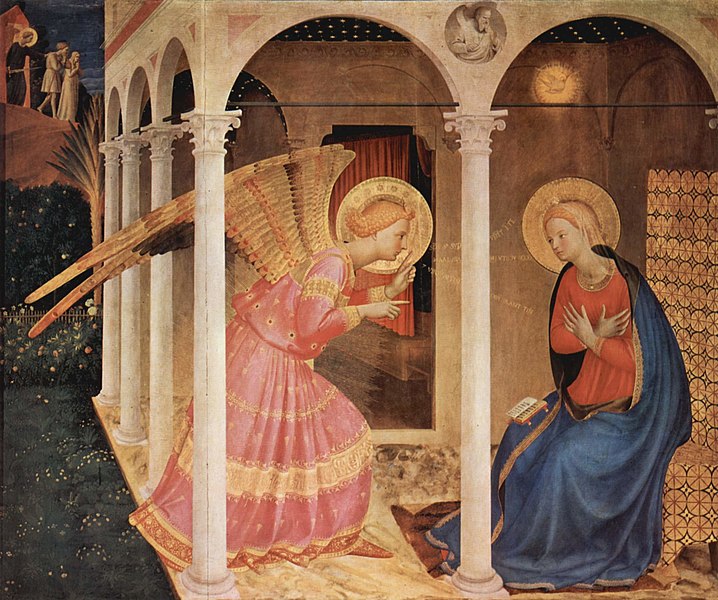

Figure 3 Figure 4
The painting shown in Figure 3 is an example of .

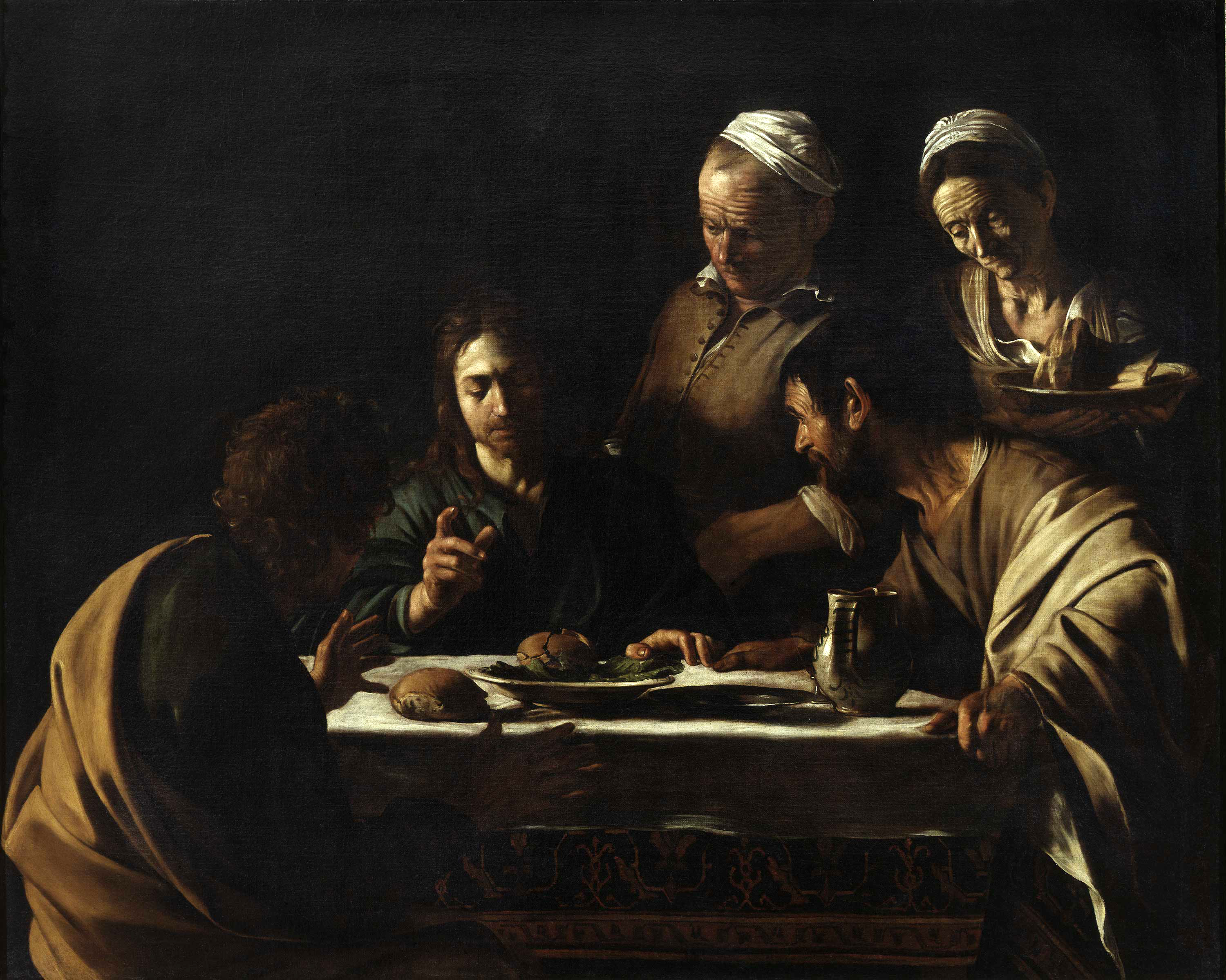
Figure 3 Figure 4
The painting shown in Figure 3 is an example of .
Tap to reveal answer
Fra Angelico is considered one of the masters of devotional art from the Middle Ages. This painting, depicting an important scene from the Bible, exhibits many of the key features of such art. Both the angel and Mary have halos around their heads and are placed in a flat space, and important symbolism is used.
Figure 3: The Annunciation (Cortona) by Fra Angelico (1433)
Figure 4: Supper at Emmaus (Milan) by Caravaggio (1606)
Fra Angelico is considered one of the masters of devotional art from the Middle Ages. This painting, depicting an important scene from the Bible, exhibits many of the key features of such art. Both the angel and Mary have halos around their heads and are placed in a flat space, and important symbolism is used.
Figure 3: The Annunciation (Cortona) by Fra Angelico (1433)
Figure 4: Supper at Emmaus (Milan) by Caravaggio (1606)
← Didn't Know|Knew It →
The German painter who made portraits of early Protestant reformers and altarpieces for Lutheran churches was .
The German painter who made portraits of early Protestant reformers and altarpieces for Lutheran churches was .
Tap to reveal answer
Lucas Cranach the Elder played an important role in the Protestant Reformation: not only did he paint portraits of leading German reformers like Martin Luther and Philip Melanchthon, but he also made altarpieces and devotional pieces that conformed to Lutheran precepts. Cranach's use of realistic drawings and perspective owed a debt to the Italian renaissance, but his use of symbolism and plain depictions were largely due to the influence of the Protestant Reformation.
Lucas Cranach the Elder played an important role in the Protestant Reformation: not only did he paint portraits of leading German reformers like Martin Luther and Philip Melanchthon, but he also made altarpieces and devotional pieces that conformed to Lutheran precepts. Cranach's use of realistic drawings and perspective owed a debt to the Italian renaissance, but his use of symbolism and plain depictions were largely due to the influence of the Protestant Reformation.
← Didn't Know|Knew It →
Portraiture done in three-dimensional settings, with props and furniture, was a signature element of the work of the sixteenth-century artist .
Portraiture done in three-dimensional settings, with props and furniture, was a signature element of the work of the sixteenth-century artist .
Tap to reveal answer
Hans Holbein the Younger had a strange relationship to other early Renaissance painters. Famous for his portraits of the court of King Henry VIII of England, Holbein crafted realistic portraits of his subjects using perspective and other techniques borrowed from Italian Renaissance painters. Nonetheless, his symbolism and allegory contained in settings and props for his portraits called back to Gothic styles.
Hans Holbein the Younger had a strange relationship to other early Renaissance painters. Famous for his portraits of the court of King Henry VIII of England, Holbein crafted realistic portraits of his subjects using perspective and other techniques borrowed from Italian Renaissance painters. Nonetheless, his symbolism and allegory contained in settings and props for his portraits called back to Gothic styles.
← Didn't Know|Knew It →