
Probability - GED Math
Card 1 of 280
A penny is altered so that the odds are 5 to 4 against it coming up tails when tossed; a nickel is altered so that the odds are 4 to 3 against it coming up tails when tossed. If both coins are tossed, what are the odds of there being two heads or two tails?
A penny is altered so that the odds are 5 to 4 against it coming up tails when tossed; a nickel is altered so that the odds are 4 to 3 against it coming up tails when tossed. If both coins are tossed, what are the odds of there being two heads or two tails?
Tap to reveal answer
5 to 4 odds in favor of heads is equal to a probability of  , which is the probability that the penny will come up heads. The probability that the penny will come up tails is
  .
.
Similarly, 4 to 3 odds in favor of heads is equal to a probability of  , which is the probability that the nickel will come up heads. The probablity that the nickel will come up tails is
  .
.
The outcomes of the tosses of the penny and the nickel are independent, so the probabilities can be multiplied.
The probability of the penny and the nickel both coming up heads is  .
.
The probability of the penny and the nickel both coming up tails is  .
.
The probabilities are added:

Since  , this translates to 32 to 31 odds in favor of this event.
5 to 4 odds in favor of heads is equal to a probability of
Similarly, 4 to 3 odds in favor of heads is equal to a probability of
The outcomes of the tosses of the penny and the nickel are independent, so the probabilities can be multiplied.
The probability of the penny and the nickel both coming up heads is
The probability of the penny and the nickel both coming up tails is
The probabilities are added:
Since
← Didn't Know|Knew It →
When rolling a  -sided die, what is the probability of rolling
  or greater?
When rolling a
Tap to reveal answer
When rolling a die, the following outcomes are possible:

Of the  outcomes,
  outcomes are
  or greater. Therefore,

When rolling a die, the following outcomes are possible:
Of the
← Didn't Know|Knew It →
The two red queens are removed from a standard deck of 52 cards. What is the probability that a randomly dealt card from this altered deck will be red?
The two red queens are removed from a standard deck of 52 cards. What is the probability that a randomly dealt card from this altered deck will be red?
Tap to reveal answer
After the removal of two red cards from a deck of 52, there are now fifty cards, of which twenty-four are red. The probability of a random card being red is therefore  , which as a percent is

After the removal of two red cards from a deck of 52, there are now fifty cards, of which twenty-four are red. The probability of a random card being red is therefore
← Didn't Know|Knew It →
What is the probability of drawing a red jack from a deck of standard playing cards?
What is the probability of drawing a red jack from a deck of standard playing cards?
Tap to reveal answer
A standard deck of play cards has  cards. There are
  jacks,
  of which are red. Therefore, the probability is:
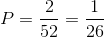
A standard deck of play cards has
← Didn't Know|Knew It →
A die is altered so that it comes up a "6" with probability  . The other five outcomes are equally likely. If this die and a fair die are rolled, what is the probability that the outcome will be a total of "2"?
A die is altered so that it comes up a "6" with probability
Tap to reveal answer
For a "2" to be rolled with two dice, both dice must show a "1". In the fair die, this is one of six equally likely outcomes, so it will happen with probability  .
.
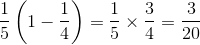
In the loaded die, since a "6" will come up with probability  , for the other five rolls to be equally likely, each, including "1", must come up with probability
 .
.
A double "1" will appear with probability
 .
.
For a "2" to be rolled with two dice, both dice must show a "1". In the fair die, this is one of six equally likely outcomes, so it will happen with probability
In the loaded die, since a "6" will come up with probability
A double "1" will appear with probability
← Didn't Know|Knew It →
A red die is altered so that it comes up a "6" with probability . The other five outcomes are equally likely. A blue die is altered similarly. If these two dice are rolled, what is the probability that the outcome will be a total of "2"?
A red die is altered so that it comes up a "6" with probability
Tap to reveal answer
For a "2" to be rolled with two dice, both dice must show a "1".
For each die, since a "6" will come up with probability , for the other five rolls to be equally likely, each, including "1", must come up with probability
.
The probability of a double "1" showing up will be
 .
.
For a "2" to be rolled with two dice, both dice must show a "1".
For each die, since a "6" will come up with probability
The probability of a double "1" showing up will be
← Didn't Know|Knew It →
Roll a fair dice. Then flip a coin. What's the probability of rolling a 3 or greater, and then flipping a heads?
Roll a fair dice. Then flip a coin. What's the probability of rolling a 3 or greater, and then flipping a heads?
Tap to reveal answer
There are 4 possibilities that a 3 or higher can be rolled on a die.
The probability of rolling a 3 or higher on a fair die is:
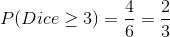
Rolling a heads on a coin has a probability of one half. Therefore,

There are 4 possibilities that a 3 or higher can be rolled on a die.
The probability of rolling a 3 or higher on a fair die is:
Rolling a heads on a coin has a probability of one half. Therefore,
← Didn't Know|Knew It →
A red die is altered so that it comes up a "6" with probability . The other five numbers are equally likely outcomes to one another. A blue die is altered similarly. If these dice are rolled, what is the probability that the outcome will be a total of "11"?
A red die is altered so that it comes up a "6" with probability
Tap to reveal answer
For a roll of "11" to occur with two dice, one die must show a "5" and the other must show a "6". For each die, since a "6" will come up with probability , for the other five rolls to be equally likely, each, including "5", must come up with probability
.
The probability of rolling a red "5" and a blue "6" will be

which is also the probability of rolling a blue "5" and a red "6". Add:
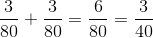
For a roll of "11" to occur with two dice, one die must show a "5" and the other must show a "6". For each die, since a "6" will come up with probability
The probability of rolling a red "5" and a blue "6" will be
which is also the probability of rolling a blue "5" and a red "6". Add:
← Didn't Know|Knew It →
A die is altered so that it comes up a "6" with probability . The other five outcomes are equally likely. If this die and a fair die are rolled, what is the probability that the outcome will be a total of "11"?
A die is altered so that it comes up a "6" with probability
Tap to reveal answer
For a roll of "11" to occur with two dice, one die must show a "5" and the other must show a "6". In the fair die, "5" and "6" are two of six equally likely outcomes, so each will happen with probability .
In the loaded die, since a "6" will come up with probability , for the other five rolls to be equally likely, each, including "5", must come up with probability
.
The probability of rolling a "5" on the loaded die and a "6" on the fair die is
 .
.
The probability of rolling a "6" on the loaded die and a "5" on the fair die is
 .
.
Add these probabilities:

For a roll of "11" to occur with two dice, one die must show a "5" and the other must show a "6". In the fair die, "5" and "6" are two of six equally likely outcomes, so each will happen with probability
In the loaded die, since a "6" will come up with probability
The probability of rolling a "5" on the loaded die and a "6" on the fair die is
The probability of rolling a "6" on the loaded die and a "5" on the fair die is
Add these probabilities:
← Didn't Know|Knew It →
A penny and a nickel are altered so that the penny comes up heads 65% of time when tossed and the nickel comes up heads 60% of the time when tossed. Both coins are tossed; what is the probability that at least one coin will come up heads?
A penny and a nickel are altered so that the penny comes up heads 65% of time when tossed and the nickel comes up heads 60% of the time when tossed. Both coins are tossed; what is the probability that at least one coin will come up heads?
Tap to reveal answer
The easiest way to determine the probability of at least one head is to determine the complement of this event, which is the probability of two tails. The penny will come up tails 35% of the time (0.35) and the nickel will come up tails 40% of the time (0.40). These are independent events, so the probability of both happening is the product, or
 .
.
The probability of at least one head - the complement of this event - is this probability subtracted from one, so
 , or 86%.
The easiest way to determine the probability of at least one head is to determine the complement of this event, which is the probability of two tails. The penny will come up tails 35% of the time (0.35) and the nickel will come up tails 40% of the time (0.40). These are independent events, so the probability of both happening is the product, or
The probability of at least one head - the complement of this event - is this probability subtracted from one, so
← Didn't Know|Knew It →
Roll a fair dice two times. What is the probability of NOT rolling a six on both trials?
Roll a fair dice two times. What is the probability of NOT rolling a six on both trials?
Tap to reveal answer
A fair dice has 6 faces. Therefore, there is a sixth chance to land on any number between 1 through 6. Rolling the die the first time is independent from the second time, which means that we must account for the probabilities for each trial.
Probability of rolling a 6 is: 1/6
Since probability adds up to 1, the odds of rolling anything other than a 6 for one trial is:
1 - 1/6 = 5/6
On two trials:

A fair dice has 6 faces. Therefore, there is a sixth chance to land on any number between 1 through 6. Rolling the die the first time is independent from the second time, which means that we must account for the probabilities for each trial.
Probability of rolling a 6 is: 1/6
Since probability adds up to 1, the odds of rolling anything other than a 6 for one trial is:
1 - 1/6 = 5/6
On two trials:
← Didn't Know|Knew It →
Six boys and four girls are finalists in a drawing. The ten names are placed into a hat, and two are drawn at random. What is the probability that both names drawn will be girls?
Six boys and four girls are finalists in a drawing. The ten names are placed into a hat, and two are drawn at random. What is the probability that both names drawn will be girls?
Tap to reveal answer
Since order is irrelevant here, we are dealing with combinations.
There are

ways to choose two out of ten students.
There are

ways to choose two out of four girls.
The probability that two girls will be chosen is therefore
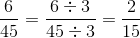 .
.
Since order is irrelevant here, we are dealing with combinations.
There are
ways to choose two out of ten students.
There are
ways to choose two out of four girls.
The probability that two girls will be chosen is therefore
← Didn't Know|Knew It →
Seven boys and three girls are finalists in a drawing. The ten names are placed into a hat, and two are drawn at random. What is the probability that the names of one boy and one girl will be drawn?
Seven boys and three girls are finalists in a drawing. The ten names are placed into a hat, and two are drawn at random. What is the probability that the names of one boy and one girl will be drawn?
Tap to reveal answer
Since order is irrelevant here, we are dealing with combinations.
There are

ways to choose two out of ten students.
There are  ways to choose one boy and one girl.
The probability that one boy and one girl will be chosen is therefore
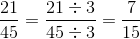 .
.
Since order is irrelevant here, we are dealing with combinations.
There are
ways to choose two out of ten students.
There are
The probability that one boy and one girl will be chosen is therefore
← Didn't Know|Knew It →
Find the probability of drawing a red card from a deck of cards.
Find the probability of drawing a red card from a deck of cards.
Tap to reveal answer
To find the probability of an event, we will use the following formula:

Given the event of drawing a red card from a deck of cards, we can calculate the following:

because there are 26 red cards in a deck
- 13 hearts
- 13 diamonds
Now, we can calculate the following:

because there are 52 total cards we could potentially draw.
So, we can substitute. We get


Therefore, the probability of drawing a red card from a deck of cards is  .
.
To find the probability of an event, we will use the following formula:
Given the event of drawing a red card from a deck of cards, we can calculate the following:
because there are 26 red cards in a deck
- 13 hearts
- 13 diamonds
Now, we can calculate the following:
because there are 52 total cards we could potentially draw.
So, we can substitute. We get
Therefore, the probability of drawing a red card from a deck of cards is
← Didn't Know|Knew It →
A parking lot contains the following:
- 3 blue cars
- 2 white cars
- 4 black cars
Find the probability the next car that leaves is a blue car.
A parking lot contains the following:
- 3 blue cars
- 2 white cars
- 4 black cars
Find the probability the next car that leaves is a blue car.
Tap to reveal answer
To find the probability of an event, we will use the following formula:

Now, given the event of a blue car leaves next, we can calculate the following:

because there are 3 blue cars in the lot.
We can also calculate the following:

because there are 9 total cars in the lot that could potentially leave:
- 3 blue cars
- 2 white cars
- 4 black cars

Now, we can substitute. We get


To find the probability of an event, we will use the following formula:
Now, given the event of a blue car leaves next, we can calculate the following:
because there are 3 blue cars in the lot.
We can also calculate the following:
because there are 9 total cars in the lot that could potentially leave:
- 3 blue cars
- 2 white cars
- 4 black cars
Now, we can substitute. We get
← Didn't Know|Knew It →
Find the probability of drawing a black card from a deck of cards.
Find the probability of drawing a black card from a deck of cards.
Tap to reveal answer
To find the probability of an event, we will use the following formula:

So, given the event of drawing a black card from a deck of cards, we can calculate the following:

because there are 26 black cards in a deck
- 13 clubs
- 13 spades
Now, we can calculate the following:

because there are 52 total cards in a deck we could potentially draw. So, we can substitute. We get


Therefore, the probability of drawing a black card from a deck of cards is  .
.
To find the probability of an event, we will use the following formula:
So, given the event of drawing a black card from a deck of cards, we can calculate the following:
because there are 26 black cards in a deck
- 13 clubs
- 13 spades
Now, we can calculate the following:
because there are 52 total cards in a deck we could potentially draw. So, we can substitute. We get
Therefore, the probability of drawing a black card from a deck of cards is
← Didn't Know|Knew It →
A bookshelf at the library contains the following:
- 10 chapter books
- 5 picture books
- 3 history books
Find the probability the next visitor selects a history book.
A bookshelf at the library contains the following:
- 10 chapter books
- 5 picture books
- 3 history books
Find the probability the next visitor selects a history book.
Tap to reveal answer
To find the probability of an event, we will use the following formula:

Now, given the event of selecting a history book, we can calculate the following:

because there are 3 history books on the shelf.
We can also calculate the following:

because there are 18 total books on the shelf we could potentially choose from:
- 10 chapter books
- 5 non-fiction books
- 3 history books

Now, we can substitute. We get


Therefore, the probability of selecting a history book is  .
.
To find the probability of an event, we will use the following formula:
Now, given the event of selecting a history book, we can calculate the following:
because there are 3 history books on the shelf.
We can also calculate the following:
because there are 18 total books on the shelf we could potentially choose from:
- 10 chapter books
- 5 non-fiction books
- 3 history books
Now, we can substitute. We get
Therefore, the probability of selecting a history book is
← Didn't Know|Knew It →
Find the probability of drawing a King, Queen, or Jack from a deck of cards.
Find the probability of drawing a King, Queen, or Jack from a deck of cards.
Tap to reveal answer
To find the probability of an event, we will use the following formula:

Now, we will look at finding the probability of drawing a King, Queen, or Jack from a deck of cards. We will consider these as 3 separate events. We will find the probability of each, then add them together.
So, we will find the probability of drawing a King from a deck of cards. We get

because there are 4 Kings in a deck of cards:
- King of Hearts
- King of Diamonds
- King of Clubs
- King of Spades
We also get

because there are 52 cards in a deck that we would potentially draw.
So, we get


Now, we will do the same for finding the probability of drawing a Queen from a deck of cards.

because there are 4 Queens in a deck of cards:
- Queen of Hearts
- Queen of Diamonds
- Queen of Clubs
- Queen of Spades
We also get

because there are 52 cards in a deck that we would potentially draw.
So, we get


And lastly, we will find the probability of drawing a Jack. We get

because there are 4 Jacks in a deck of cards:
- Jack of Hearts
- Jack of Diamonds
- Jack of Clubs
- Jack of Spades
We also get

because there are 52 cards in a deck that we would potentially draw.
So, we get


Now, to find the probability of drawing a King, Queen, or Jack, we will add them all together. We get

Therefore, the probability of drawing a King, Queen, or Jack from a deck of cards is  .
.
To find the probability of an event, we will use the following formula:
Now, we will look at finding the probability of drawing a King, Queen, or Jack from a deck of cards. We will consider these as 3 separate events. We will find the probability of each, then add them together.
So, we will find the probability of drawing a King from a deck of cards. We get
because there are 4 Kings in a deck of cards:
- King of Hearts
- King of Diamonds
- King of Clubs
- King of Spades
We also get
because there are 52 cards in a deck that we would potentially draw.
So, we get
Now, we will do the same for finding the probability of drawing a Queen from a deck of cards.
because there are 4 Queens in a deck of cards:
- Queen of Hearts
- Queen of Diamonds
- Queen of Clubs
- Queen of Spades
We also get
because there are 52 cards in a deck that we would potentially draw.
So, we get
And lastly, we will find the probability of drawing a Jack. We get
because there are 4 Jacks in a deck of cards:
- Jack of Hearts
- Jack of Diamonds
- Jack of Clubs
- Jack of Spades
We also get
because there are 52 cards in a deck that we would potentially draw.
So, we get
Now, to find the probability of drawing a King, Queen, or Jack, we will add them all together. We get
Therefore, the probability of drawing a King, Queen, or Jack from a deck of cards is
← Didn't Know|Knew It →
A card is selected from a standard deck of 52 cards. A student picks out a card, and does not replace the card. What is the probability that the student will pick out a club, and then another club?
A card is selected from a standard deck of 52 cards. A student picks out a card, and does not replace the card. What is the probability that the student will pick out a club, and then another club?
Tap to reveal answer
The deck is divided into four suits: Clubs, Diamonds, Hearts, and Spades. There are 13 of each suit in a standard deck.
The probability of picking out a club out of a plain deck is: 
The student does not replace the card back into the deck, which means that there are 51 cards remaining, and there are only 12 clubs remaining in the deck.
The probability of picking out another club would be: 
To identity the probability, simply multiply the first and second probabilities.

The answer is: 
The deck is divided into four suits: Clubs, Diamonds, Hearts, and Spades. There are 13 of each suit in a standard deck.
The probability of picking out a club out of a plain deck is:
The student does not replace the card back into the deck, which means that there are 51 cards remaining, and there are only 12 clubs remaining in the deck.
The probability of picking out another club would be:
To identity the probability, simply multiply the first and second probabilities.
The answer is:
← Didn't Know|Knew It →
A closet contains the following:
- 10 shirts
- 2 jackets
- 3 pairs of jeans
Find the probability of grabbing a shirt.
A closet contains the following:
- 10 shirts
- 2 jackets
- 3 pairs of jeans
Find the probability of grabbing a shirt.
Tap to reveal answer
To find the probability of an event, we will use the following formula:

Now, given the event of grabbing a shirt from the closet, we can calculate the following:

because there are 10 shirts in the closet.
We can also calculate the following:

because there are 15 total things in the closet we could potentially grab:
- 10 shirts
- 2 jackets
- 3 pairs of jeans

Now, we can substitute. We get


Therefore, the probability of grabbing a shirt from the closet is  .
.
To find the probability of an event, we will use the following formula:
Now, given the event of grabbing a shirt from the closet, we can calculate the following:
because there are 10 shirts in the closet.
We can also calculate the following:
because there are 15 total things in the closet we could potentially grab:
- 10 shirts
- 2 jackets
- 3 pairs of jeans
Now, we can substitute. We get
Therefore, the probability of grabbing a shirt from the closet is
← Didn't Know|Knew It →