
Polynomial Functions - Math
Card 1 of 16
List the transformations that have been enacted upon the following equation:

List the transformations that have been enacted upon the following equation:
Tap to reveal answer
Since the equation given in the question is based off of the parent function  , we can write the general form for transformations like this:

 determines the vertical stretch or compression factor.
- If
 is greater than 1, the function has been vertically stretched (expanded) by a factor of
  .
.
- If
 is between 0 and 1, the function has been vertically compressed by a factor of
  .
.
In this case,  is 4, so the function has been vertically stretched by a factor of 4.
 determines the horizontal stretch or compression factor.
- If
 is greater than 1, the function has been horizontally compressed by a factor of
  .
.
- If
 is between 0 and 1, the function has been horizontally stretched (expanded) by a factor of
  .
.
In this case,  is 6, so the function has been horizontally compressed by a factor of 6. (Remember that horizontal stretch and compression are opposite of vertical stretch and compression!)
 determines the horizontal translation.
- If
 is positive, the function was translated
  units right.
- If
 is negative, the function was translated
  units left.
In this case,  is 3, so the function was translated 3 units right.
 determines the vertical translation.
- If
 is positive, the function was translated
  units up.
- If
 is negative, the function was translated
  units down.
In this case,  is -7, so the function was translated 7 units down.
Since the equation given in the question is based off of the parent function
- If
- If
In this case,
- If
- If
In this case,
- If
- If
In this case,
- If
- If
In this case,
← Didn't Know|Knew It →
List the transformations that have been enacted upon the following equation:
List the transformations that have been enacted upon the following equation:
Tap to reveal answer
Since the equation given in the question is based off of the parent function , we can write the general form for transformations like this:
determines the vertical stretch or compression factor.
- If is greater than 1, the function has been vertically stretched (expanded) by a factor of .
- If is between 0 and 1, the function has been vertically compressed by a factor of .
In this case, is 4, so the function has been vertically stretched by a factor of 4.
determines the horizontal stretch or compression factor.
- If is greater than 1, the function has been horizontally compressed by a factor of .
- If is between 0 and 1, the function has been horizontally stretched (expanded) by a factor of .
In this case, is 6, so the function has been horizontally compressed by a factor of 6. (Remember that horizontal stretch and compression are opposite of vertical stretch and compression!)
determines the horizontal translation.
- If is positive, the function was translated units right.
- If is negative, the function was translated units left.
In this case, is 3, so the function was translated 3 units right.
determines the vertical translation.
- If is positive, the function was translated units up.
- If is negative, the function was translated units down.
In this case, is -7, so the function was translated 7 units down.
Since the equation given in the question is based off of the parent function
- If
- If
In this case,
- If
- If
In this case,
- If
- If
In this case,
- If
- If
In this case,
← Didn't Know|Knew It →
Solve the following system of equations:


Solve the following system of equations:
Tap to reveal answer
We will solve this system of equations by Elimination. Multiply both sides of the first equation by 2, to get:

Then add this new equation, to the second original equation, to get:

or

Plugging this value of  back into the first original equation, gives:


or

We will solve this system of equations by Elimination. Multiply both sides of the first equation by 2, to get:
Then add this new equation, to the second original equation, to get:
or
Plugging this value of
or
← Didn't Know|Knew It →
It took Jack 25 minutes to travel 14 miles, what was Jack's average speed in mph?
It took Jack 25 minutes to travel 14 miles, what was Jack's average speed in mph?
Tap to reveal answer
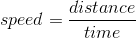
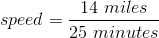
* We have to change the time from minutes to hours, there are 60 minutes in one hour.


* We have to change the time from minutes to hours, there are 60 minutes in one hour.
← Didn't Know|Knew It →
Let  and
and  . Evaluate
  .
.
Let
Tap to reveal answer
Substitute  into
into  , and then substitute the answer into
  .
.




Substitute
← Didn't Know|Knew It →
List the transformations that have been enacted upon the following equation:
List the transformations that have been enacted upon the following equation:
Tap to reveal answer
Since the equation given in the question is based off of the parent function , we can write the general form for transformations like this:
determines the vertical stretch or compression factor.
- If is greater than 1, the function has been vertically stretched (expanded) by a factor of .
- If is between 0 and 1, the function has been vertically compressed by a factor of .
In this case, is 4, so the function has been vertically stretched by a factor of 4.
determines the horizontal stretch or compression factor.
- If is greater than 1, the function has been horizontally compressed by a factor of .
- If is between 0 and 1, the function has been horizontally stretched (expanded) by a factor of .
In this case, is 6, so the function has been horizontally compressed by a factor of 6. (Remember that horizontal stretch and compression are opposite of vertical stretch and compression!)
determines the horizontal translation.
- If is positive, the function was translated units right.
- If is negative, the function was translated units left.
In this case, is 3, so the function was translated 3 units right.
determines the vertical translation.
- If is positive, the function was translated units up.
- If is negative, the function was translated units down.
In this case, is -7, so the function was translated 7 units down.
Since the equation given in the question is based off of the parent function
- If
- If
In this case,
- If
- If
In this case,
- If
- If
In this case,
- If
- If
In this case,
← Didn't Know|Knew It →
Solve the following system of equations:
Solve the following system of equations:
Tap to reveal answer
We will solve this system of equations by Elimination. Multiply both sides of the first equation by 2, to get:
Then add this new equation, to the second original equation, to get:
or
Plugging this value of back into the first original equation, gives:
or
We will solve this system of equations by Elimination. Multiply both sides of the first equation by 2, to get:
Then add this new equation, to the second original equation, to get:
or
Plugging this value of
or
← Didn't Know|Knew It →
It took Jack 25 minutes to travel 14 miles, what was Jack's average speed in mph?
It took Jack 25 minutes to travel 14 miles, what was Jack's average speed in mph?
Tap to reveal answer
* We have to change the time from minutes to hours, there are 60 minutes in one hour.
* We have to change the time from minutes to hours, there are 60 minutes in one hour.
← Didn't Know|Knew It →
Let and . Evaluate .
Let
Tap to reveal answer
Substitute into , and then substitute the answer into .
Substitute
← Didn't Know|Knew It →
List the transformations that have been enacted upon the following equation:
List the transformations that have been enacted upon the following equation:
Tap to reveal answer
Since the equation given in the question is based off of the parent function , we can write the general form for transformations like this:
determines the vertical stretch or compression factor.
- If is greater than 1, the function has been vertically stretched (expanded) by a factor of .
- If is between 0 and 1, the function has been vertically compressed by a factor of .
In this case, is 4, so the function has been vertically stretched by a factor of 4.
determines the horizontal stretch or compression factor.
- If is greater than 1, the function has been horizontally compressed by a factor of .
- If is between 0 and 1, the function has been horizontally stretched (expanded) by a factor of .
In this case, is 6, so the function has been horizontally compressed by a factor of 6. (Remember that horizontal stretch and compression are opposite of vertical stretch and compression!)
determines the horizontal translation.
- If is positive, the function was translated units right.
- If is negative, the function was translated units left.
In this case, is 3, so the function was translated 3 units right.
determines the vertical translation.
- If is positive, the function was translated units up.
- If is negative, the function was translated units down.
In this case, is -7, so the function was translated 7 units down.
Since the equation given in the question is based off of the parent function
- If
- If
In this case,
- If
- If
In this case,
- If
- If
In this case,
- If
- If
In this case,
← Didn't Know|Knew It →
Solve the following system of equations:
Solve the following system of equations:
Tap to reveal answer
We will solve this system of equations by Elimination. Multiply both sides of the first equation by 2, to get:
Then add this new equation, to the second original equation, to get:
or
Plugging this value of back into the first original equation, gives:
or
We will solve this system of equations by Elimination. Multiply both sides of the first equation by 2, to get:
Then add this new equation, to the second original equation, to get:
or
Plugging this value of
or
← Didn't Know|Knew It →
It took Jack 25 minutes to travel 14 miles, what was Jack's average speed in mph?
It took Jack 25 minutes to travel 14 miles, what was Jack's average speed in mph?
Tap to reveal answer
* We have to change the time from minutes to hours, there are 60 minutes in one hour.
* We have to change the time from minutes to hours, there are 60 minutes in one hour.
← Didn't Know|Knew It →
Let and . Evaluate .
Let
Tap to reveal answer
Substitute into , and then substitute the answer into .
Substitute
← Didn't Know|Knew It →
Solve the following system of equations:
Solve the following system of equations:
Tap to reveal answer
We will solve this system of equations by Elimination. Multiply both sides of the first equation by 2, to get:
Then add this new equation, to the second original equation, to get:
or
Plugging this value of back into the first original equation, gives:
or
We will solve this system of equations by Elimination. Multiply both sides of the first equation by 2, to get:
Then add this new equation, to the second original equation, to get:
or
Plugging this value of
or
← Didn't Know|Knew It →
It took Jack 25 minutes to travel 14 miles, what was Jack's average speed in mph?
It took Jack 25 minutes to travel 14 miles, what was Jack's average speed in mph?
Tap to reveal answer
* We have to change the time from minutes to hours, there are 60 minutes in one hour.
* We have to change the time from minutes to hours, there are 60 minutes in one hour.
← Didn't Know|Knew It →
Let and . Evaluate .
Let
Tap to reveal answer
Substitute into , and then substitute the answer into .
Substitute
← Didn't Know|Knew It →