
How to find the length of the side of a 45/45/90 right isosceles triangle - Math
Card 1 of 12
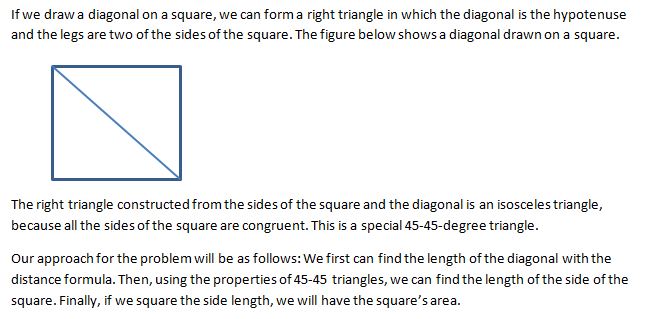
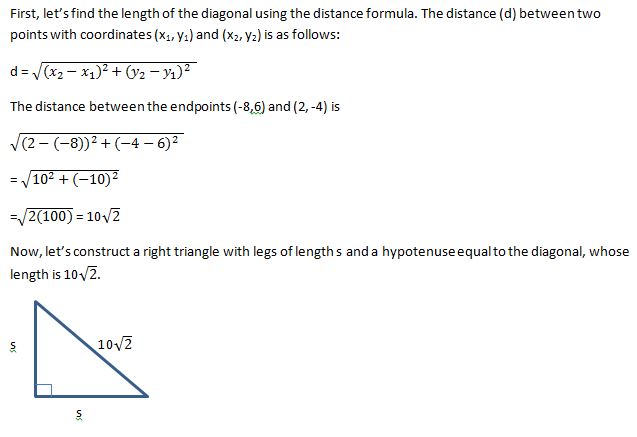
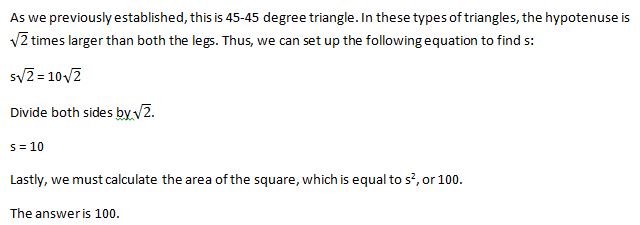
What is the area of a square that has a diagonal whose endpoints in the coordinate plane are located at (-8, 6) and (2, -4)?
What is the area of a square that has a diagonal whose endpoints in the coordinate plane are located at (-8, 6) and (2, -4)?
Tap to reveal answer
← Didn't Know|Knew It →
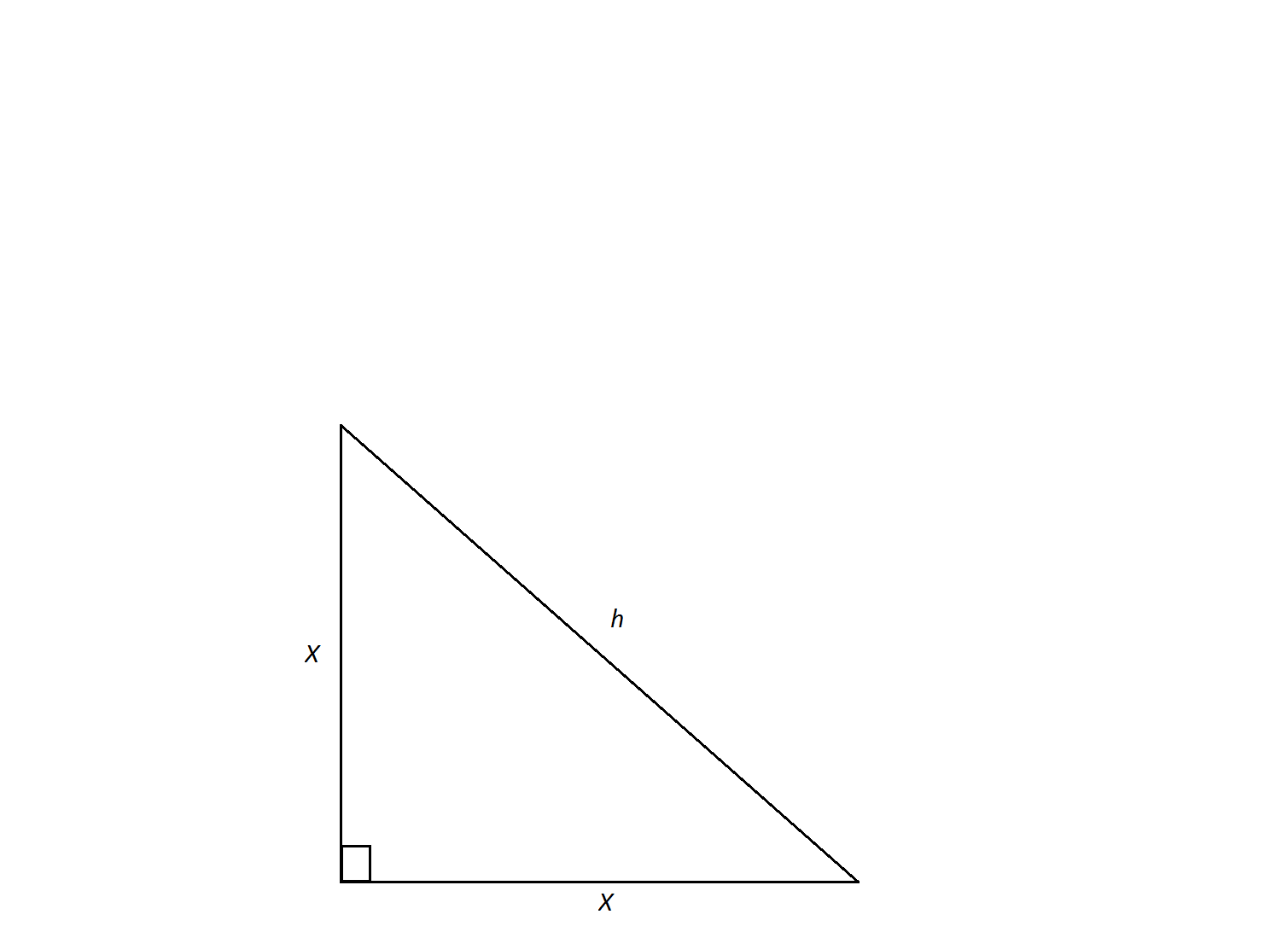
An isosceles triangle has a hypotenuse of  . Find the length of its sides,
  .
.
An isosceles triangle has a hypotenuse of
Tap to reveal answer
An isosceles triangle is a special triangle due to the values of its angles. These triangles are referred to as  triangles and their side lengths follow a specific pattern that states you can calculate the length of the legs of an isoceles triangle by dividing the length of the hypotenuse by the square root of 2


An isosceles triangle is a special triangle due to the values of its angles. These triangles are referred to as
← Didn't Know|Knew It →
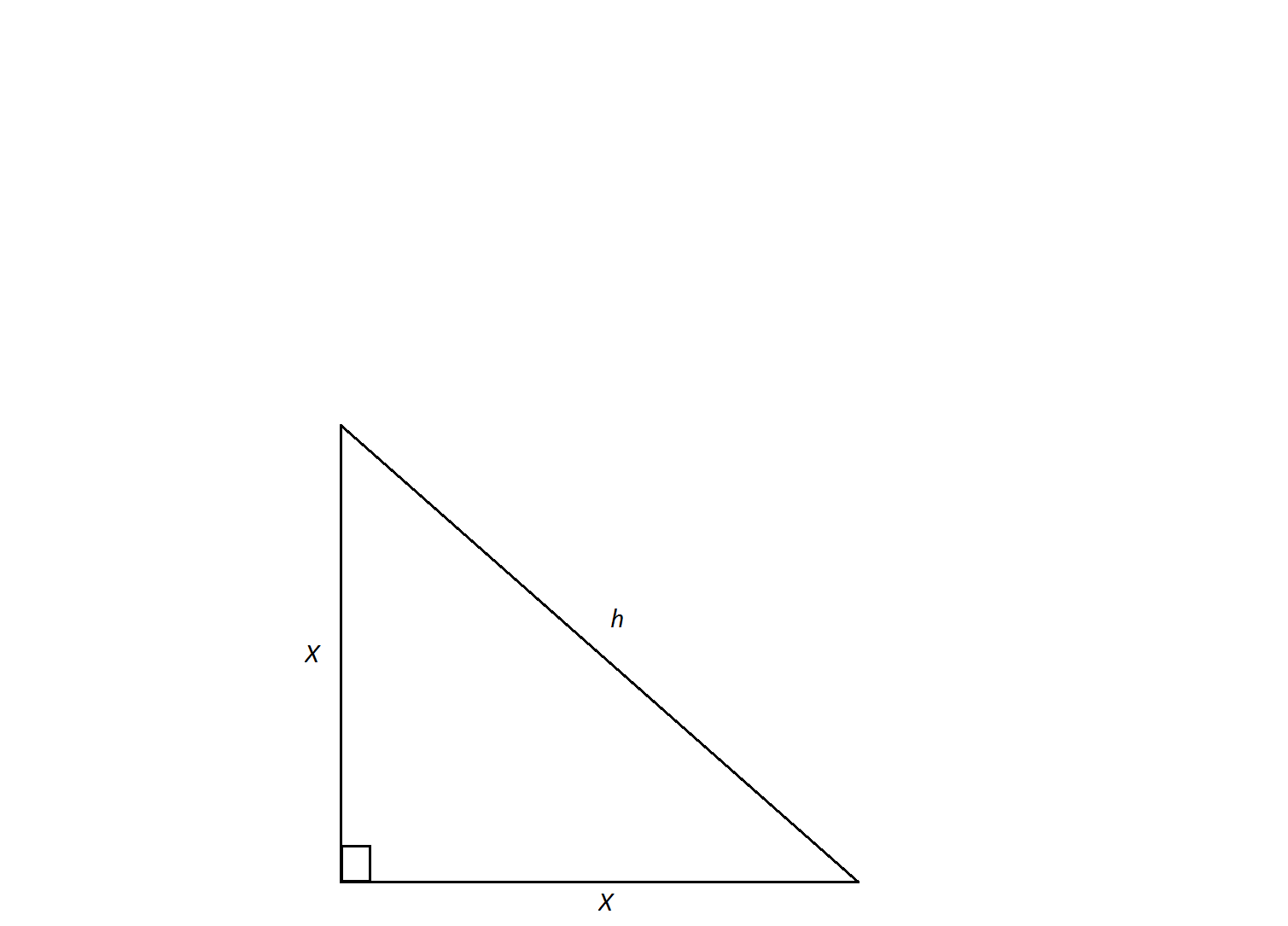
The measure of the sides of this isosceles right triangle are  . Find the measure of its hypotenuse,
  .
.
The measure of the sides of this isosceles right triangle are
Tap to reveal answer
An isosceles triangle is a special triangle due to the values of its angles. These triangles are referred to as  triangles and their side lenghts follow a specific pattern that states you can calculate the length of the hypotenuse of an isoceles triangle by multiplying the length of one of the legs by the square root of 2.




An isosceles triangle is a special triangle due to the values of its angles. These triangles are referred to as
← Didn't Know|Knew It →
What is the area of a square that has a diagonal whose endpoints in the coordinate plane are located at (-8, 6) and (2, -4)?
What is the area of a square that has a diagonal whose endpoints in the coordinate plane are located at (-8, 6) and (2, -4)?
Tap to reveal answer
← Didn't Know|Knew It →
An isosceles triangle has a hypotenuse of . Find the length of its sides, .
An isosceles triangle has a hypotenuse of
Tap to reveal answer
An isosceles triangle is a special triangle due to the values of its angles. These triangles are referred to as triangles and their side lengths follow a specific pattern that states you can calculate the length of the legs of an isoceles triangle by dividing the length of the hypotenuse by the square root of 2
An isosceles triangle is a special triangle due to the values of its angles. These triangles are referred to as
← Didn't Know|Knew It →
The measure of the sides of this isosceles right triangle are . Find the measure of its hypotenuse, .
The measure of the sides of this isosceles right triangle are
Tap to reveal answer
An isosceles triangle is a special triangle due to the values of its angles. These triangles are referred to as triangles and their side lenghts follow a specific pattern that states you can calculate the length of the hypotenuse of an isoceles triangle by multiplying the length of one of the legs by the square root of 2.
An isosceles triangle is a special triangle due to the values of its angles. These triangles are referred to as
← Didn't Know|Knew It →
What is the area of a square that has a diagonal whose endpoints in the coordinate plane are located at (-8, 6) and (2, -4)?
What is the area of a square that has a diagonal whose endpoints in the coordinate plane are located at (-8, 6) and (2, -4)?
Tap to reveal answer
← Didn't Know|Knew It →
An isosceles triangle has a hypotenuse of . Find the length of its sides, .
An isosceles triangle has a hypotenuse of
Tap to reveal answer
An isosceles triangle is a special triangle due to the values of its angles. These triangles are referred to as triangles and their side lengths follow a specific pattern that states you can calculate the length of the legs of an isoceles triangle by dividing the length of the hypotenuse by the square root of 2
An isosceles triangle is a special triangle due to the values of its angles. These triangles are referred to as
← Didn't Know|Knew It →
The measure of the sides of this isosceles right triangle are . Find the measure of its hypotenuse, .
The measure of the sides of this isosceles right triangle are
Tap to reveal answer
An isosceles triangle is a special triangle due to the values of its angles. These triangles are referred to as triangles and their side lenghts follow a specific pattern that states you can calculate the length of the hypotenuse of an isoceles triangle by multiplying the length of one of the legs by the square root of 2.
An isosceles triangle is a special triangle due to the values of its angles. These triangles are referred to as
← Didn't Know|Knew It →
What is the area of a square that has a diagonal whose endpoints in the coordinate plane are located at (-8, 6) and (2, -4)?
What is the area of a square that has a diagonal whose endpoints in the coordinate plane are located at (-8, 6) and (2, -4)?
Tap to reveal answer
← Didn't Know|Knew It →
An isosceles triangle has a hypotenuse of . Find the length of its sides, .
An isosceles triangle has a hypotenuse of
Tap to reveal answer
An isosceles triangle is a special triangle due to the values of its angles. These triangles are referred to as triangles and their side lengths follow a specific pattern that states you can calculate the length of the legs of an isoceles triangle by dividing the length of the hypotenuse by the square root of 2
An isosceles triangle is a special triangle due to the values of its angles. These triangles are referred to as
← Didn't Know|Knew It →
The measure of the sides of this isosceles right triangle are . Find the measure of its hypotenuse, .
The measure of the sides of this isosceles right triangle are
Tap to reveal answer
An isosceles triangle is a special triangle due to the values of its angles. These triangles are referred to as triangles and their side lenghts follow a specific pattern that states you can calculate the length of the hypotenuse of an isoceles triangle by multiplying the length of one of the legs by the square root of 2.
An isosceles triangle is a special triangle due to the values of its angles. These triangles are referred to as
← Didn't Know|Knew It →