
How to find the volume of a prism - Math
Card 1 of 20
What is the volume?
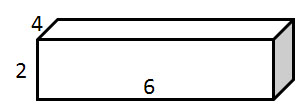
What is the volume?
Tap to reveal answer
The volume is calculated using the equation:


The volume is calculated using the equation:
← Didn't Know|Knew It →
A rectangular box has two sides with the following lengths:
 and
and 
If it possesses a volume of  , what is the area of its largest side?
A rectangular box has two sides with the following lengths:


If it possesses a volume of 
Tap to reveal answer
The volume of a rectangular prism is found using the following formula:

If we substitute our known values, then we can solve for the missing side.


Divide both sides of the equation by 12.


We now know that the missing length equals 7 centimeters.
This means that the box can have sides with the following dimensions: 3cm by 4cm; 7cm by 3cm; or 7cm by 4cm. The greatest area of one side belongs to the one that is 7cm by 4cm.


The volume of a rectangular prism is found using the following formula:

If we substitute our known values, then we can solve for the missing side.


Divide both sides of the equation by 12.


We now know that the missing length equals 7 centimeters.
This means that the box can have sides with the following dimensions: 3cm by 4cm; 7cm by 3cm; or 7cm by 4cm. The greatest area of one side belongs to the one that is 7cm by 4cm.


← Didn't Know|Knew It →
Find the volume of the following triangular prism.
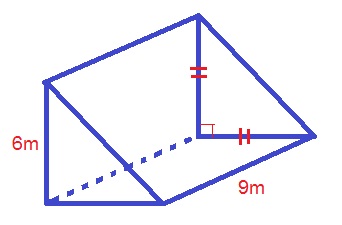
Find the volume of the following triangular prism.
Tap to reveal answer
The formula for the volume of a triangular prism is:
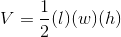
Where  is the length of the triangle,
  is the width of the triangle, and
  is the height of the prism
Plugging in our values, we get:
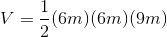

The formula for the volume of a triangular prism is:
Where
Plugging in our values, we get:
← Didn't Know|Knew It →
Find the volume of the following triangular prism.
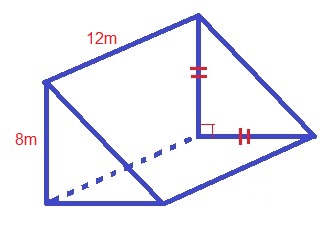
Find the volume of the following triangular prism.
Tap to reveal answer
The formula for the volume of a triangular prism is:

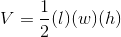
Where  is the length of the base,
  is the width of the base, and
  is the height of the prism
Plugging in our values, we get:
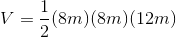

The formula for the volume of a triangular prism is:
Where
Plugging in our values, we get:
← Didn't Know|Knew It →
Find the volume of the following triangular prism:
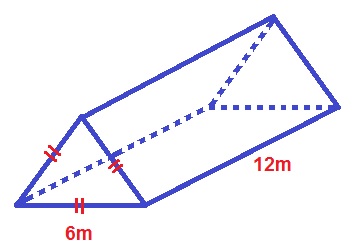
Find the volume of the following triangular prism:
Tap to reveal answer
The formula for the volume of an equilateral, triangular prism is:

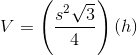
Where  is the length of the triangle side and
  is the length of the height.
Plugging in our values, we get:
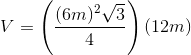

The formula for the volume of an equilateral, triangular prism is:
Where
Plugging in our values, we get:
← Didn't Know|Knew It →
A rectangular box has two sides with the following lengths:
and
If it possesses a volume of , what is the area of its largest side?
A rectangular box has two sides with the following lengths:
If it possesses a volume of
Tap to reveal answer
The volume of a rectangular prism is found using the following formula:
If we substitute our known values, then we can solve for the missing side.
Divide both sides of the equation by 12.
We now know that the missing length equals 7 centimeters.
This means that the box can have sides with the following dimensions: 3cm by 4cm; 7cm by 3cm; or 7cm by 4cm. The greatest area of one side belongs to the one that is 7cm by 4cm.
The volume of a rectangular prism is found using the following formula:
If we substitute our known values, then we can solve for the missing side.
Divide both sides of the equation by 12.
We now know that the missing length equals 7 centimeters.
This means that the box can have sides with the following dimensions: 3cm by 4cm; 7cm by 3cm; or 7cm by 4cm. The greatest area of one side belongs to the one that is 7cm by 4cm.
← Didn't Know|Knew It →
Find the volume of the following triangular prism.
Find the volume of the following triangular prism.
Tap to reveal answer
The formula for the volume of a triangular prism is:
Where is the length of the triangle, is the width of the triangle, and is the height of the prism
Plugging in our values, we get:
The formula for the volume of a triangular prism is:
Where
Plugging in our values, we get:
← Didn't Know|Knew It →
Find the volume of the following triangular prism.
Find the volume of the following triangular prism.
Tap to reveal answer
The formula for the volume of a triangular prism is:
Where is the length of the base, is the width of the base, and is the height of the prism
Plugging in our values, we get:
The formula for the volume of a triangular prism is:
Where
Plugging in our values, we get:
← Didn't Know|Knew It →
Find the volume of the following triangular prism:
Find the volume of the following triangular prism:
Tap to reveal answer
The formula for the volume of an equilateral, triangular prism is:
Where is the length of the triangle side and is the length of the height.
Plugging in our values, we get:
The formula for the volume of an equilateral, triangular prism is:
Where
Plugging in our values, we get:
← Didn't Know|Knew It →
What is the volume?
What is the volume?
Tap to reveal answer
The volume is calculated using the equation:
The volume is calculated using the equation:
← Didn't Know|Knew It →
A rectangular box has two sides with the following lengths:
and
If it possesses a volume of , what is the area of its largest side?
A rectangular box has two sides with the following lengths:
If it possesses a volume of
Tap to reveal answer
The volume of a rectangular prism is found using the following formula:
If we substitute our known values, then we can solve for the missing side.
Divide both sides of the equation by 12.
We now know that the missing length equals 7 centimeters.
This means that the box can have sides with the following dimensions: 3cm by 4cm; 7cm by 3cm; or 7cm by 4cm. The greatest area of one side belongs to the one that is 7cm by 4cm.
The volume of a rectangular prism is found using the following formula:
If we substitute our known values, then we can solve for the missing side.
Divide both sides of the equation by 12.
We now know that the missing length equals 7 centimeters.
This means that the box can have sides with the following dimensions: 3cm by 4cm; 7cm by 3cm; or 7cm by 4cm. The greatest area of one side belongs to the one that is 7cm by 4cm.
← Didn't Know|Knew It →
Find the volume of the following triangular prism.
Find the volume of the following triangular prism.
Tap to reveal answer
The formula for the volume of a triangular prism is:
Where is the length of the triangle, is the width of the triangle, and is the height of the prism
Plugging in our values, we get:
The formula for the volume of a triangular prism is:
Where
Plugging in our values, we get:
← Didn't Know|Knew It →
Find the volume of the following triangular prism.
Find the volume of the following triangular prism.
Tap to reveal answer
The formula for the volume of a triangular prism is:
Where is the length of the base, is the width of the base, and is the height of the prism
Plugging in our values, we get:
The formula for the volume of a triangular prism is:
Where
Plugging in our values, we get:
← Didn't Know|Knew It →
Find the volume of the following triangular prism:
Find the volume of the following triangular prism:
Tap to reveal answer
The formula for the volume of an equilateral, triangular prism is:
Where is the length of the triangle side and is the length of the height.
Plugging in our values, we get:
The formula for the volume of an equilateral, triangular prism is:
Where
Plugging in our values, we get:
← Didn't Know|Knew It →
What is the volume?
What is the volume?
Tap to reveal answer
The volume is calculated using the equation:
The volume is calculated using the equation:
← Didn't Know|Knew It →
What is the volume?
What is the volume?
Tap to reveal answer
The volume is calculated using the equation:
The volume is calculated using the equation:
← Didn't Know|Knew It →
A rectangular box has two sides with the following lengths:
and
If it possesses a volume of , what is the area of its largest side?
A rectangular box has two sides with the following lengths:
If it possesses a volume of
Tap to reveal answer
The volume of a rectangular prism is found using the following formula:
If we substitute our known values, then we can solve for the missing side.
Divide both sides of the equation by 12.
We now know that the missing length equals 7 centimeters.
This means that the box can have sides with the following dimensions: 3cm by 4cm; 7cm by 3cm; or 7cm by 4cm. The greatest area of one side belongs to the one that is 7cm by 4cm.
The volume of a rectangular prism is found using the following formula:
If we substitute our known values, then we can solve for the missing side.
Divide both sides of the equation by 12.
We now know that the missing length equals 7 centimeters.
This means that the box can have sides with the following dimensions: 3cm by 4cm; 7cm by 3cm; or 7cm by 4cm. The greatest area of one side belongs to the one that is 7cm by 4cm.
← Didn't Know|Knew It →
Find the volume of the following triangular prism.
Find the volume of the following triangular prism.
Tap to reveal answer
The formula for the volume of a triangular prism is:
Where is the length of the triangle, is the width of the triangle, and is the height of the prism
Plugging in our values, we get:
The formula for the volume of a triangular prism is:
Where
Plugging in our values, we get:
← Didn't Know|Knew It →
Find the volume of the following triangular prism.
Find the volume of the following triangular prism.
Tap to reveal answer
The formula for the volume of a triangular prism is:
Where is the length of the base, is the width of the base, and is the height of the prism
Plugging in our values, we get:
The formula for the volume of a triangular prism is:
Where
Plugging in our values, we get:
← Didn't Know|Knew It →
Find the volume of the following triangular prism:
Find the volume of the following triangular prism:
Tap to reveal answer
The formula for the volume of an equilateral, triangular prism is:
Where is the length of the triangle side and is the length of the height.
Plugging in our values, we get:
The formula for the volume of an equilateral, triangular prism is:
Where
Plugging in our values, we get:
← Didn't Know|Knew It →