
Trigonometry - Math
Card 1 of 500
Simplify the function below:
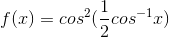
Simplify the function below:
Tap to reveal answer
We need to use the following formulas:
a) 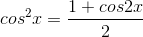
and
b) 
We can simplify  as follows:

We need to use the following formulas:
a)
and
b)
We can simplify
← Didn't Know|Knew It →
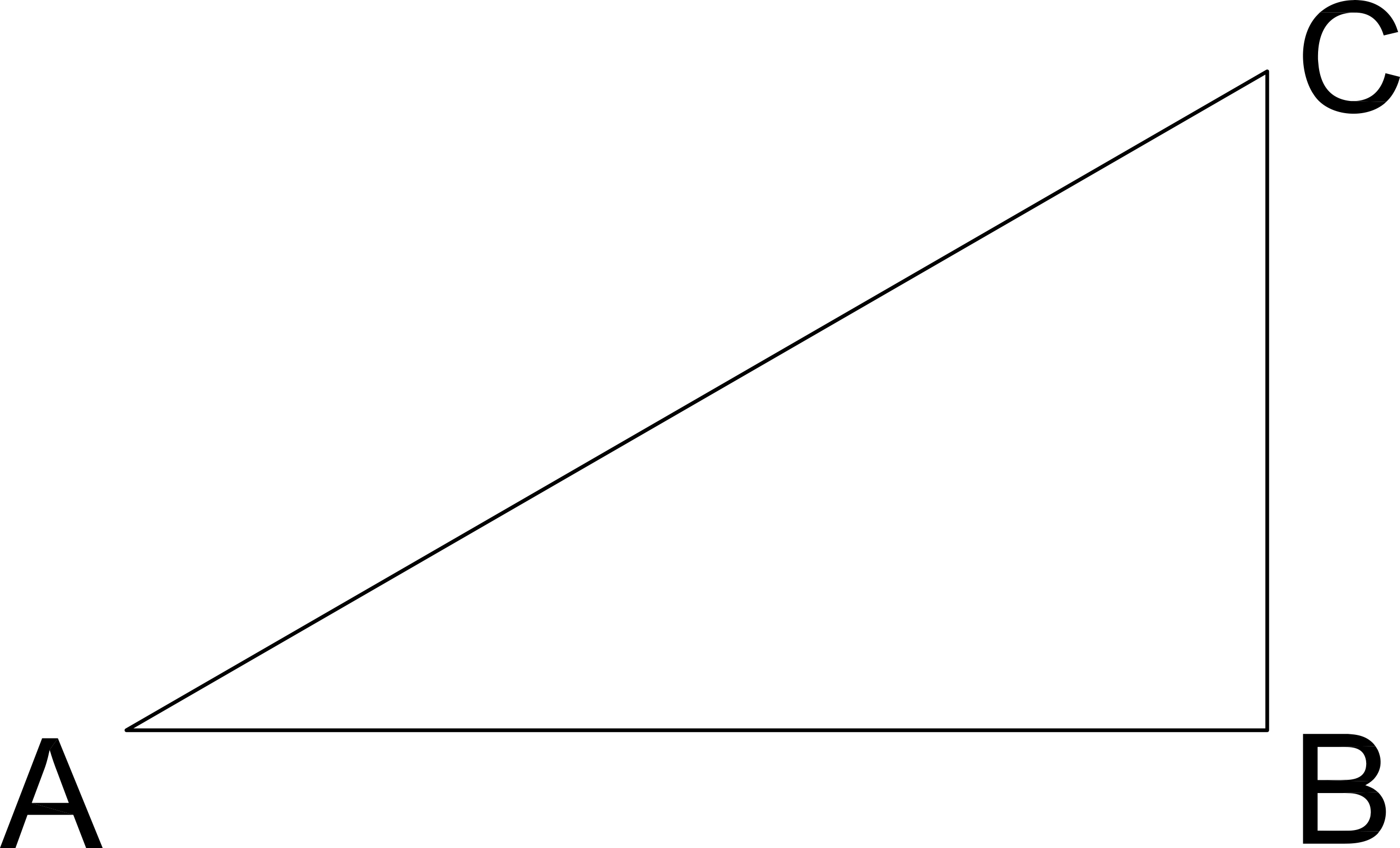
What is the length of CB?
What is the length of CB?
Tap to reveal answer


← Didn't Know|Knew It →
If  equals
  and
and  is
is  , how long is
  ?
?
If
Tap to reveal answer
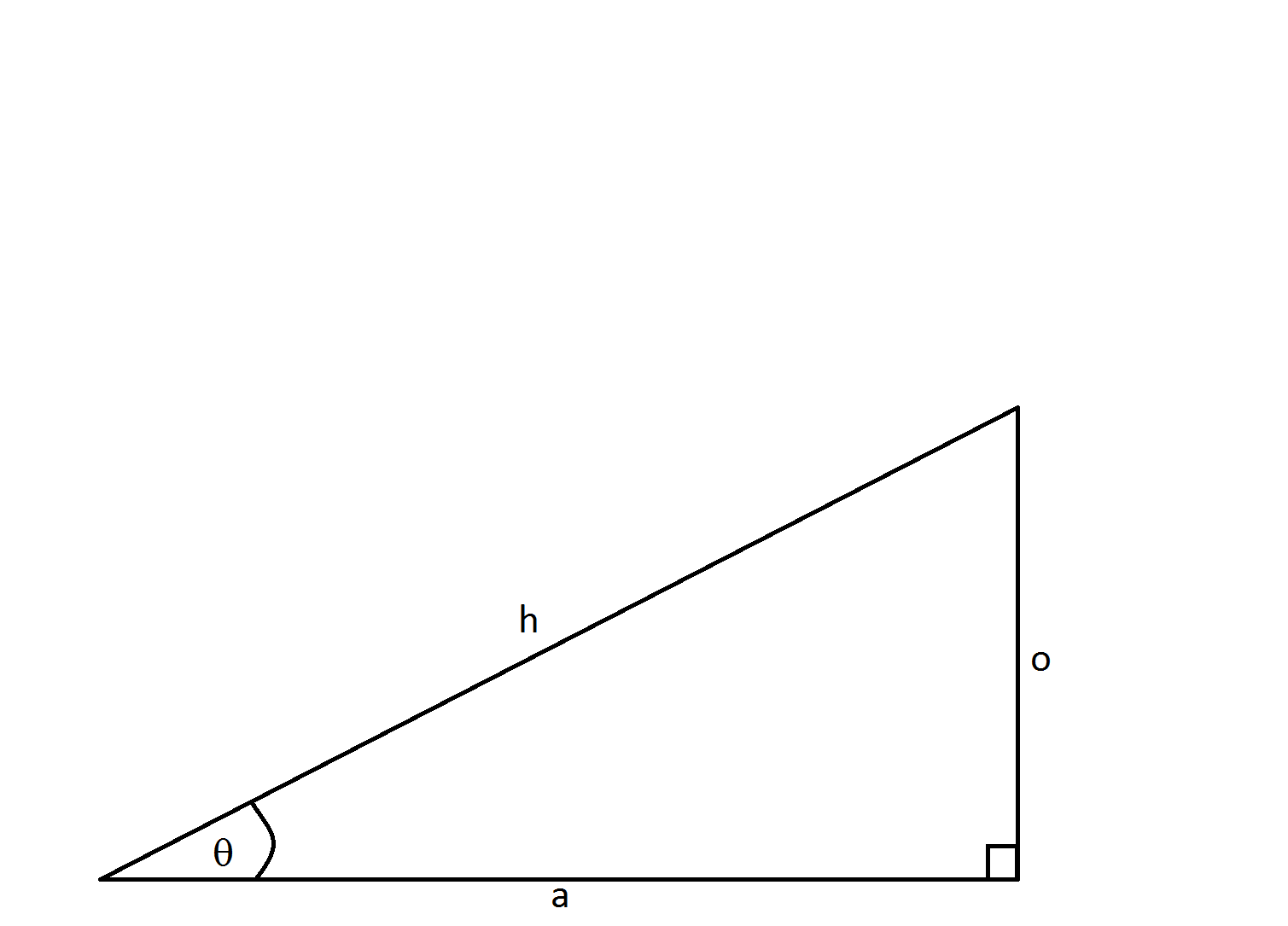
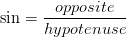
This problem can be easily solved using trig identities. We are given the hypotenuse  and
and  . We can then calculate side
  using the
  .
.
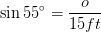
Rearrange to solve for  .
.


If you calculated the side to equal  then you utilized the
  function rather than the
  .
.
This problem can be easily solved using trig identities. We are given the hypotenuse
Rearrange to solve for
If you calculated the side to equal
← Didn't Know|Knew It →
Solve for  .
.
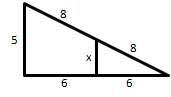
(Figure not drawn to scale).
Solve for
(Figure not drawn to scale).
Tap to reveal answer
The side-angle-side (SAS) postulate can be used to determine that the triangles are similar. Both triangles share the angle farthest to the right. In the smaller triangle, the upper edge has a length of  , and in the larger triangle is has a length of
  . In the smaller triangle, the bottom edge has a length of
  , and in the larger triangle is has a length of
  . We can test for comparison.

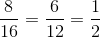
The statement is true, so the triangles must be similar.
We can use this ratio to solve for the missing side length.

To simplify, we will only use the lower edge and left edge comparison.

Cross multiply.

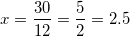
The side-angle-side (SAS) postulate can be used to determine that the triangles are similar. Both triangles share the angle farthest to the right. In the smaller triangle, the upper edge has a length of
The statement is true, so the triangles must be similar.
We can use this ratio to solve for the missing side length.
To simplify, we will only use the lower edge and left edge comparison.
Cross multiply.
← Didn't Know|Knew It →
Solve for  .
.
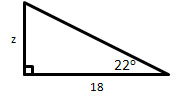
(Figure not drawn to scale).
Solve for
(Figure not drawn to scale).
Tap to reveal answer
We can solve using the trigonometric definition of tangent.

We are given the angle and the adjacent side.
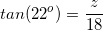
We can find  with a calculator.



We can solve using the trigonometric definition of tangent.
We are given the angle and the adjacent side.
We can find
← Didn't Know|Knew It →
Simplify the function below:
Simplify the function below:
Tap to reveal answer
We need to use the following formulas:
a)
and
b)
We can simplify as follows:
We need to use the following formulas:
a)
and
b)
We can simplify
← Didn't Know|Knew It →
A triangle has sides of length 12, 17, and 22. Of the measures of the three interior angles, which is the greatest of the three?
A triangle has sides of length 12, 17, and 22. Of the measures of the three interior angles, which is the greatest of the three?
Tap to reveal answer
We can apply the Law of Cosines to find the measure of this angle, which we will call :

The widest angle will be opposite the side of length 22, so we will set:
 ,
,  ,
, 



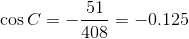

We can apply the Law of Cosines to find the measure of this angle, which we will call :
The widest angle will be opposite the side of length 22, so we will set:
← Didn't Know|Knew It →
In  ,
,  ,
,  , and
, and  . To the nearest tenth, what is
  ?
?
In
Tap to reveal answer
By the Law of Cosines:

or, equivalently,

Substitute:



By the Law of Cosines:
or, equivalently,
Substitute:
← Didn't Know|Knew It →
In  ,
,  ,
,  , and
, and  . To the nearest tenth, what is
  ?
?
In
Tap to reveal answer
By the Triangle Inequality, this triangle can exist, since  .
.
By the Law of Cosines:

Substitute the sidelengths and solve for  :
:






By the Triangle Inequality, this triangle can exist, since
By the Law of Cosines:
Substitute the sidelengths and solve for
← Didn't Know|Knew It →

Tap to reveal answer


← Didn't Know|Knew It →
What is the  of
of  ?
?
What is the
Tap to reveal answer
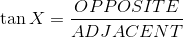
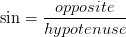
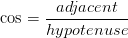
When working with basic trigonometric identities, it's easiest to remember the mnemonic:  .
.
 ,
,
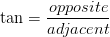
When one names the right triangle, the opposite side is opposite to the angle, the adjacent side is next to the angle, and the hypotenuse spans the two legs of the right angle.
When working with basic trigonometric identities, it's easiest to remember the mnemonic:
When one names the right triangle, the opposite side is opposite to the angle, the adjacent side is next to the angle, and the hypotenuse spans the two legs of the right angle.
← Didn't Know|Knew It →
What is the  of
of  ?
?
What is the
Tap to reveal answer
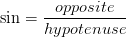
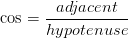
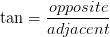
When working with basic trigonometric identities, it's easiest to remember the mnemonic:  .
.
 ,
,
When one names the right triangle, the opposite side is opposite to the angle, the adjacent side is next to the angle, and the hypotenuse spans the two legs of the right angle.
When working with basic trigonometric identities, it's easiest to remember the mnemonic:
When one names the right triangle, the opposite side is opposite to the angle, the adjacent side is next to the angle, and the hypotenuse spans the two legs of the right angle.
← Didn't Know|Knew It →
What is the  of
of  ?
?
What is the
Tap to reveal answer
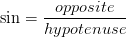
When working with basic trigonometric identities, it's easiest to remember the mnemonic:  .
.
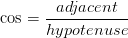
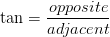
When one names the right triangle, the opposite side is opposite to the angle, the adjacent side is next to the angle, and the hypotenuse spans the two legs of the right angle.
When working with basic trigonometric identities, it's easiest to remember the mnemonic:
When one names the right triangle, the opposite side is opposite to the angle, the adjacent side is next to the angle, and the hypotenuse spans the two legs of the right angle.
← Didn't Know|Knew It →
Simplify  .
.
Simplify
Tap to reveal answer
Simplifying trionometric expressions or identities often involves a little trial and error, so it's hard to come up with a strategy that works every time. A lot of times you have to try multiple strategies and see which one helps.
Often, if you have any form of 

 or
or  in an expression, it helps to rewrite it in terms of sine and cosine. In this problem, we can use the identities
  and
and  .
.

 .
.
This doesn't seem to help a whole lot. However, we should recognize that  because of the Pythagorean identity
  .
.

We can cancel the  terms in the numerator and denominator.
 .
.
Simplifying trionometric expressions or identities often involves a little trial and error, so it's hard to come up with a strategy that works every time. A lot of times you have to try multiple strategies and see which one helps.
Often, if you have any form of
This doesn't seem to help a whole lot. However, we should recognize that
We can cancel the
← Didn't Know|Knew It →
Tap to reveal answer
← Didn't Know|Knew It →
What is  if
if  and
and  ?
?
What is
Tap to reveal answer
In order to find  we need to utilize the given information in the problem. We are given the opposite and adjacent sides. We can then, by definition, find the
  of
of  and its measure in degrees by utilizing the
  function.


Now to find the measure of the angle using the  function.


If you calculated the angle's measure to be  then your calculator was set to radians and needs to be set on degrees.
In order to find
Now to find the measure of the angle using the
If you calculated the angle's measure to be
← Didn't Know|Knew It →

Tap to reveal answer
In order to find  we need to utilize the given information in the problem. We are given the opposite and hypotenuse sides. We can then, by definition, find the
  of
of  and its measure in degrees by utilizing the
  function.


Now to find the measure of the angle using the  function.


If you calculated the angle's measure to be  then your calculator was set to radians and needs to be set on degrees.
In order to find
Now to find the measure of the angle using the
If you calculated the angle's measure to be
← Didn't Know|Knew It →

What is  ?
?
What is
Tap to reveal answer
To get rid of  , we take the
  or
or  of both sides.


To get rid of
← Didn't Know|Knew It →
What is the length of CB?
What is the length of CB?
Tap to reveal answer
← Didn't Know|Knew It →
If equals and is , how long is ?
If
Tap to reveal answer
This problem can be easily solved using trig identities. We are given the hypotenuse and . We can then calculate side using the .
Rearrange to solve for .
If you calculated the side to equal then you utilized the function rather than the .
This problem can be easily solved using trig identities. We are given the hypotenuse
Rearrange to solve for
If you calculated the side to equal
← Didn't Know|Knew It →