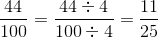
How to find the decimal equivalent of a fraction - SSAT Middle Level: Quantitative
Card 1 of 140
Arrange these numbers from least to greatest:

Arrange these numbers from least to greatest:
Tap to reveal answer
Rewrite all three numbers as their decimal equivalents by dividing numerator by denominator.


From the decimal equivalents, the fractions can be arranged as follows:

Rewrite all three numbers as their decimal equivalents by dividing numerator by denominator.
From the decimal equivalents, the fractions can be arranged as follows:
← Didn't Know|Knew It →
Arrange these numbers from least to greatest:

Arrange these numbers from least to greatest:
Tap to reveal answer
Rewrite all three numbers as their decimal equivalents by dividing numerator by denominator.


To arrange negative numbers from least to greatest, we must arrange them so that their absolute values (values without the negative symbol) go from greatest to least. In descending order, the absolute values are

so, in ascending order, the numbers themselves are
,
or, as fractions,
.
Rewrite all three numbers as their decimal equivalents by dividing numerator by denominator.
To arrange negative numbers from least to greatest, we must arrange them so that their absolute values (values without the negative symbol) go from greatest to least. In descending order, the absolute values are
so, in ascending order, the numbers themselves are
,
or, as fractions,
.
← Didn't Know|Knew It →
Arrange these numbers from least to greatest:

Arrange these numbers from least to greatest:
Tap to reveal answer
Rewrite all three numbers as their decimal equivalents by dividing numerator by denominator.


To arrange negative numbers from least to greatest, we must arrange them so that their absolute values (values without the negative symbol) go from greatest to least. In descending order, the absolute values are

so, in ascending order, the numbers themselves are
,
or, as fractions,
.
Rewrite all three numbers as their decimal equivalents by dividing numerator by denominator.
To arrange negative numbers from least to greatest, we must arrange them so that their absolute values (values without the negative symbol) go from greatest to least. In descending order, the absolute values are
so, in ascending order, the numbers themselves are
,
or, as fractions,
.
← Didn't Know|Knew It →
How many of the following four numbers are elements of the set
?
(A) 
(B) 
(C) 
(D) 
How many of the following four numbers are elements of the set ?
(A)
(B)
(C)
(D)
Tap to reveal answer
and
, so we are looking for numbers that fall between 0.4 and 0.6 exclusive. Of the four choices, 0.44 and 0.55 fall between these numbers. The correct response is two.
and
, so we are looking for numbers that fall between 0.4 and 0.6 exclusive. Of the four choices, 0.44 and 0.55 fall between these numbers. The correct response is two.
← Didn't Know|Knew It →
How many of the following four numbers are elements of the set
?
(A) 
(B) 
(C) 
(D) 
How many of the following four numbers are elements of the set ?
(A)
(B)
(C)
(D)
Tap to reveal answer
and
, so we are looking for numbers that fall between 0.4 and 0.6 exclusive. Of the four choices, 0.44 and 0.55 fall between these numbers. The correct response is two.
and
, so we are looking for numbers that fall between 0.4 and 0.6 exclusive. Of the four choices, 0.44 and 0.55 fall between these numbers. The correct response is two.
← Didn't Know|Knew It →
How many of the following four numbers are elements of the set
?
(A) 
(B) 
(C) 
(D) 
How many of the following four numbers are elements of the set ?
(A)
(B)
(C)
(D)
Tap to reveal answer
and
, so we are looking for numbers that fall between 0.4 and 0.6 exclusive. Of the four choices, 0.44 and 0.55 fall between these numbers. The correct response is two.
and
, so we are looking for numbers that fall between 0.4 and 0.6 exclusive. Of the four choices, 0.44 and 0.55 fall between these numbers. The correct response is two.
← Didn't Know|Knew It →
How many of the following four numbers are elements of the set
?
(A) 
(B) 
(C) 
(D) 
How many of the following four numbers are elements of the set ?
(A)
(B)
(C)
(D)
Tap to reveal answer
and
, so we are looking for numbers that fall between 0.4 and 0.6 exclusive. Of the four choices, 0.44 and 0.55 fall between these numbers. The correct response is two.
and
, so we are looking for numbers that fall between 0.4 and 0.6 exclusive. Of the four choices, 0.44 and 0.55 fall between these numbers. The correct response is two.
← Didn't Know|Knew It →
Arrange these numbers from least to greatest:

Arrange these numbers from least to greatest:
Tap to reveal answer
Rewrite all three numbers as their decimal equivalents by dividing numerator by denominator.


From the decimal equivalents, the fractions can be arranged as follows:

Rewrite all three numbers as their decimal equivalents by dividing numerator by denominator.
From the decimal equivalents, the fractions can be arranged as follows:
← Didn't Know|Knew It →
Arrange these numbers from least to greatest:

Arrange these numbers from least to greatest:
Tap to reveal answer
Rewrite all three numbers as their decimal equivalents by dividing numerator by denominator.


From the decimal equivalents, the fractions can be arranged as follows:

Rewrite all three numbers as their decimal equivalents by dividing numerator by denominator.
From the decimal equivalents, the fractions can be arranged as follows:
← Didn't Know|Knew It →
Arrange these numbers from least to greatest:

Arrange these numbers from least to greatest:
Tap to reveal answer
Rewrite all three numbers as their decimal equivalents by dividing numerator by denominator.


To arrange negative numbers from least to greatest, we must arrange them so that their absolute values (values without the negative symbol) go from greatest to least. In descending order, the absolute values are

so, in ascending order, the numbers themselves are
,
or, as fractions,
.
Rewrite all three numbers as their decimal equivalents by dividing numerator by denominator.
To arrange negative numbers from least to greatest, we must arrange them so that their absolute values (values without the negative symbol) go from greatest to least. In descending order, the absolute values are
so, in ascending order, the numbers themselves are
,
or, as fractions,
.
← Didn't Know|Knew It →
Arrange these numbers from least to greatest:

Arrange these numbers from least to greatest:
Tap to reveal answer
To arrange negative numbers from least to greatest, we must arrange them so that their absolute values (values without the negative symbol) go from greatest to least.

This can be done by going from right to left starting with the units digit. The units and tenths digits are the same, but the hundredths digit of 0.40444 is the least, so this number is less than the other two. The thousandths digit of 0.44044 is less than that of 0.44404, so it is the lesser of the two that remain. Therefore, in descending order, the absolute values are
,
and in ascending order, the numbers are
.
To arrange negative numbers from least to greatest, we must arrange them so that their absolute values (values without the negative symbol) go from greatest to least.
This can be done by going from right to left starting with the units digit. The units and tenths digits are the same, but the hundredths digit of 0.40444 is the least, so this number is less than the other two. The thousandths digit of 0.44044 is less than that of 0.44404, so it is the lesser of the two that remain. Therefore, in descending order, the absolute values are
,
and in ascending order, the numbers are
.
← Didn't Know|Knew It →
Arrange these numbers from least to greatest:

Arrange these numbers from least to greatest:
Tap to reveal answer
Rewrite all three numbers as their decimal equivalents by dividing numerator by denominator.


From the decimal equivalents, the fractions can be arranged as follows:

Rewrite all three numbers as their decimal equivalents by dividing numerator by denominator.
From the decimal equivalents, the fractions can be arranged as follows:
← Didn't Know|Knew It →
Arrange these numbers from least to greatest:

Arrange these numbers from least to greatest:
Tap to reveal answer
Rewrite all three numbers as their decimal equivalents by dividing numerator by denominator.


To arrange negative numbers from least to greatest, we must arrange them so that their absolute values (values without the negative symbol) go from greatest to least. In descending order, the absolute values are

so, in ascending order, the numbers themselves are
,
or, as fractions,
.
Rewrite all three numbers as their decimal equivalents by dividing numerator by denominator.
To arrange negative numbers from least to greatest, we must arrange them so that their absolute values (values without the negative symbol) go from greatest to least. In descending order, the absolute values are
so, in ascending order, the numbers themselves are
,
or, as fractions,
.
← Didn't Know|Knew It →
Arrange these numbers from least to greatest:

Arrange these numbers from least to greatest:
Tap to reveal answer
To arrange negative numbers from least to greatest, we must arrange them so that their absolute values (values without the negative symbol) go from greatest to least.

This can be done by going from right to left starting with the units digit. The units and tenths digits are the same, but the hundredths digit of 0.40444 is the least, so this number is less than the other two. The thousandths digit of 0.44044 is less than that of 0.44404, so it is the lesser of the two that remain. Therefore, in descending order, the absolute values are
,
and in ascending order, the numbers are
.
To arrange negative numbers from least to greatest, we must arrange them so that their absolute values (values without the negative symbol) go from greatest to least.
This can be done by going from right to left starting with the units digit. The units and tenths digits are the same, but the hundredths digit of 0.40444 is the least, so this number is less than the other two. The thousandths digit of 0.44044 is less than that of 0.44404, so it is the lesser of the two that remain. Therefore, in descending order, the absolute values are
,
and in ascending order, the numbers are
.
← Didn't Know|Knew It →
Arrange these numbers from least to greatest:

Arrange these numbers from least to greatest:
Tap to reveal answer
To arrange negative numbers from least to greatest, we must arrange them so that their absolute values (values without the negative symbol) go from greatest to least.

This can be done by going from right to left starting with the units digit. The units and tenths digits are the same, but the hundredths digit of 0.40444 is the least, so this number is less than the other two. The thousandths digit of 0.44044 is less than that of 0.44404, so it is the lesser of the two that remain. Therefore, in descending order, the absolute values are
,
and in ascending order, the numbers are
.
To arrange negative numbers from least to greatest, we must arrange them so that their absolute values (values without the negative symbol) go from greatest to least.
This can be done by going from right to left starting with the units digit. The units and tenths digits are the same, but the hundredths digit of 0.40444 is the least, so this number is less than the other two. The thousandths digit of 0.44044 is less than that of 0.44404, so it is the lesser of the two that remain. Therefore, in descending order, the absolute values are
,
and in ascending order, the numbers are
.
← Didn't Know|Knew It →
Arrange these numbers from least to greatest:

Arrange these numbers from least to greatest:
Tap to reveal answer
To arrange negative numbers from least to greatest, we must arrange them so that their absolute values (values without the negative symbol) go from greatest to least.

This can be done by going from right to left starting with the units digit. The units and tenths digits are the same, but the hundredths digit of 0.40444 is the least, so this number is less than the other two. The thousandths digit of 0.44044 is less than that of 0.44404, so it is the lesser of the two that remain. Therefore, in descending order, the absolute values are
,
and in ascending order, the numbers are
.
To arrange negative numbers from least to greatest, we must arrange them so that their absolute values (values without the negative symbol) go from greatest to least.
This can be done by going from right to left starting with the units digit. The units and tenths digits are the same, but the hundredths digit of 0.40444 is the least, so this number is less than the other two. The thousandths digit of 0.44044 is less than that of 0.44404, so it is the lesser of the two that remain. Therefore, in descending order, the absolute values are
,
and in ascending order, the numbers are
.
← Didn't Know|Knew It →
Which of the following is NOT equal to
?
Which of the following is NOT equal to ?
Tap to reveal answer
All of the answer choices multiply to give you 10 except

so that is the correct answer.
All of the answer choices multiply to give you 10 except
so that is the correct answer.
← Didn't Know|Knew It →
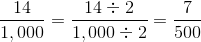
What fractions equals
?
What fractions equals ?
Tap to reveal answer
is equal to
.
Thus we are looking for a fraction that reduces to
.
reduces to
(divide numerator and denominator by 4).
reduces to 2 (divide numerator and denominator by 4).
reduces to 4 (divide numerator and denominator by 2).
reduces
(divide numerator and denominator by 4).
is the only one that reduces to
(divide numerator and denominator by 8).
is equal to
.
Thus we are looking for a fraction that reduces to .
reduces to
(divide numerator and denominator by 4).
reduces to 2 (divide numerator and denominator by 4).
reduces to 4 (divide numerator and denominator by 2).
reduces
(divide numerator and denominator by 4).
is the only one that reduces to
(divide numerator and denominator by 8).
← Didn't Know|Knew It →
Write 0.74 as a fraction in lowest terms.
Tap to reveal answer
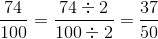
This decimal has its last nonzero digit in the hundredths place; this number is equal to "seventy-four one-hundredths". As a fraction, this is

This is not in lowest terms, since

.
Reduce:

This decimal has its last nonzero digit in the hundredths place; this number is equal to "seventy-four one-hundredths". As a fraction, this is
This is not in lowest terms, since .
Reduce:
← Didn't Know|Knew It →
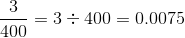
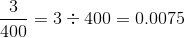
Write the decimal equivalent of
.
Write the decimal equivalent of .
Tap to reveal answer
← Didn't Know|Knew It →